 Orcas Island
 Roofing Built for Lopez Village's Marine Climate
Lopez Village sits close to the water, and that proximity shapes everything about how a roof ages here. Salt-laden air moves in off the water and settles on every exposed surface, including your shingles, flashing, and fasteners. Add San Juan County's long wet season, driving rain that comes in sideways during winter storms, and a moss season that can stretch from fall through spring, and you have a roofing environment that punishes shortcuts. Asphalt shingle roofing can absolutely hold up here for its full expected service life, but only when the material, the underlayment system, and the installation details are matched to what this specific climate does to a roof.
This page is about one job in one place: asphalt shingle roofing for homes in and around Lopez Village. We're not going to give you a generic rundown of shingle roofing in general. We're going to walk through what actually matters for a roof that has to survive salt air, sustained rain events, and moss pressure year after year.
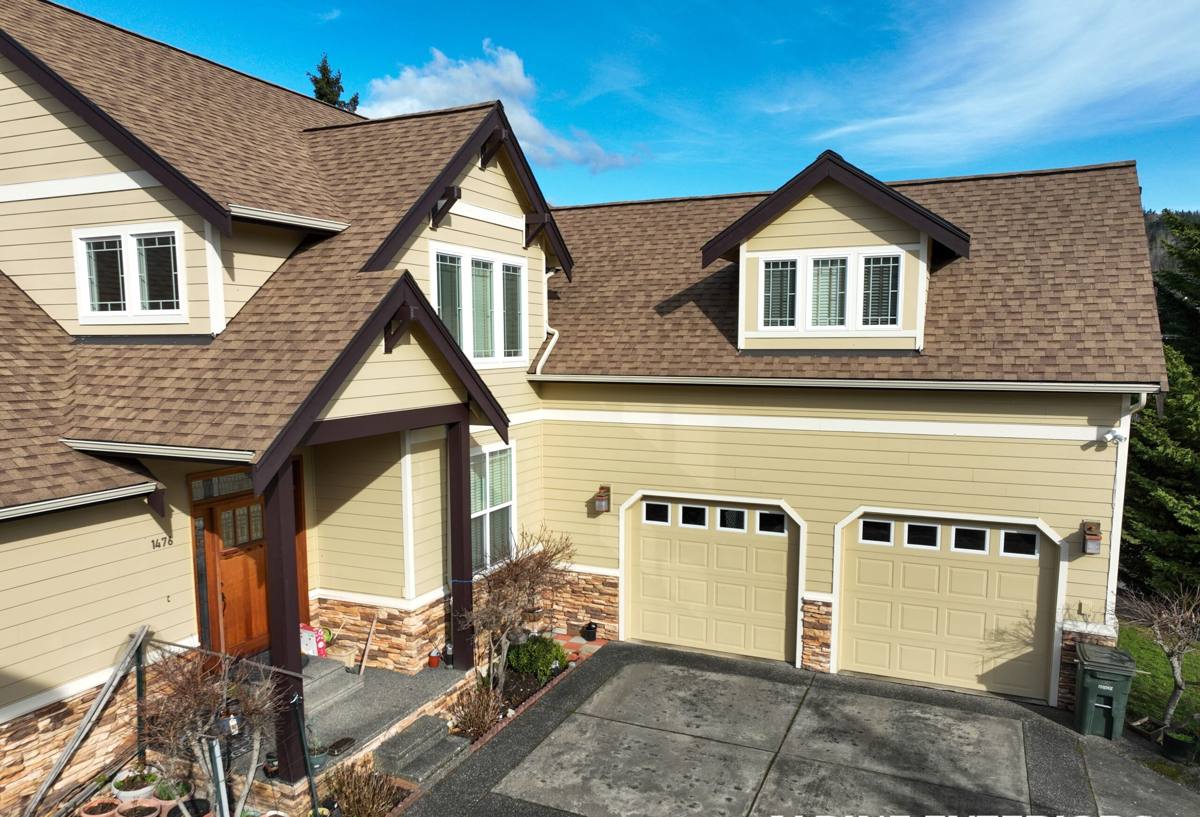
What Salt Air Actually Does to a Roof
Salt air is corrosive, and it doesn't just affect metal roofing or flashing near the coast — it affects every metal component on an asphalt shingle roof, including nails, staples, vent flashing, drip edge, and any exposed fastener heads. Over time, salt exposure accelerates corrosion on lower-grade fasteners and flashing metals, which can lead to streaking, weakened fastener holds, and premature flashing failure long before the shingles themselves wear out.
The practical takeaway for Lopez Village homeowners is that the roofing system is only as strong as its weakest component, and in a salt-air environment, that weak point is almost always the metal, not the shingle mat itself. A roof can have excellent shingles and still fail early if the flashing and fasteners weren't chosen with corrosion resistance in mind.
Where This Shows Up First
- Exposed nail heads on ridge caps and hip lines, where coating wear exposes bare metal fastest
- Step flashing and counter-flashing around chimneys and dormers
- Valley metal, especially on lower-slope sections that hold water longer
- Plumbing vent boots and their collars, where rubber and metal both age faster near salt air
Driving Rain and the Underlayment System
San Juan County's winter storms don't just drop a lot of rain — they push it sideways. Wind-driven rain finds its way under shingles through paths that would stay dry in a calmer climate: shallow-pitch transitions, valleys, and any spot where wind can lift a shingle edge even slightly. This is why the underlayment system underneath the visible shingles matters as much as the shingles themselves.
A roof built for Lopez Village conditions should include synthetic underlayment across the full roof deck, plus self-adhered ice-and-water membrane in the vulnerable zones: valleys, eaves, around penetrations, and along any wall-to-roof transitions. That membrane acts as a secondary barrier if wind-driven rain gets past the shingle layer, which happens more often in this climate than most homeowners realize. Skipping or skimping on this layer is one of the most common ways a shingle roof underperforms near the water, even when the shingles look fine from the ground.
Ventilation Matters More in a Wet Climate
Balanced attic ventilation — intake at the eaves, exhaust at the ridge — does two jobs in this climate. It helps the roof deck dry out between rain events, and it reduces the temperature and moisture swings that make moss and algae growth worse. A roof with poor ventilation stays damp longer after every storm, and a roof deck that stays damp is a roof deck that ages faster from the inside, regardless of how good the shingles on top are.
Moss: The Slow Damage Most Homeowners Miss
Moss season here is long, and moss doesn't just look bad — it holds moisture directly against the shingle surface and works its way under shingle tabs and around fasteners as it grows. Left unaddressed, moss growth can lift shingle edges, trap debris, and create small dams that redirect water in ways the roof wasn't designed to handle. On north-facing slopes and shaded sections near tree cover, moss pressure is often heaviest and the damage progresses fastest.
A well-built roof doesn't eliminate moss risk entirely — nothing does in this climate — but it reduces it through material choice, proper ventilation to reduce persistent dampness, and detailing that doesn't create the debris traps moss thrives in. Zinc or copper strip options near the ridge can also help suppress regrowth on some roofs, and it's worth discussing whether that fits your specific roof during an estimate.
Moss Warning Signs Worth Checking For
- Green or dark growth concentrated on shaded or north-facing slopes
- Granule buildup in gutters, which signals accelerated shingle wear underneath moss patches
- Lifted or curled shingle tabs where moss has worked underneath the edge
- Standing debris in valleys that holds moisture longer after rain
Choosing the Right Shingle for This Climate
Not every asphalt shingle product is built the same, and in a salt-air, high-moisture environment, the differences matter more than they would in a drier inland climate. We look at wind rating, algae resistance, and the manufacturer's warranty structure as it applies to coastal exposure, since some warranties reduce coverage or require specific installation practices in marine environments.
| Factor | Why It Matters in Lopez Village |
|---|---|
| Wind rating | Higher-rated shingles resist lifting during wind-driven rain events common to San Juan County winters |
| Algae-resistant granules | Reduces staining and slows the moisture-holding growth that leads into moss problems |
| Fastener compatibility | Corrosion-resistant fasteners protect the warranty and prevent early metal failure near salt air |
| Warranty terms for coastal exposure | Some manufacturer warranties have specific requirements or exclusions for marine environments — worth confirming before you buy |
We don't push a single brand as the only option for every home. The right shingle depends on your roof's exposure, slope, and how close you are to the water, and we'll walk through the honest trade-offs with you rather than defaulting to whatever is easiest to install.
How a Correct Installation Comes Together
The visible shingle layer gets all the attention, but roof failures in this climate almost always trace back to details underneath or around the shingles, not the shingles themselves. Here's what a correctly installed roof includes, in the order it goes down.
- Deck inspection and repair. Any soft, delaminated, or water-damaged decking gets replaced before anything else goes down. Installing new roofing over a compromised deck just hides the problem.
- Drip edge at eaves and rakes. Corrosion-resistant metal, installed under the underlayment at the eaves and over it at the rakes, directs water off the roof edge instead of behind the fascia.
- Ice-and-water membrane in vulnerable zones. Valleys, eaves, penetrations, and low-slope transitions get self-adhered membrane as a secondary water barrier.
- Synthetic underlayment across the field. This is the primary water-shedding layer beneath the shingles and needs correct overlap and fastening to perform in wind-driven rain.
- Flashing at every penetration and transition. Chimneys, skylights, sidewalls, and vent pipes each need flashing detailed for that specific condition, not a one-size-fits-all patch.
- Shingle installation with correct nailing. Nail placement, count, and depth all affect wind resistance and warranty validity — this is a step where shortcuts don't show up until the first big storm.
- Ridge and hip finishing, plus ventilation tie-in. Ridge vent or other exhaust ventilation gets integrated here, along with cap shingles rated for the wind exposure of your site.
Signs Your Roof Needs Attention
Homeowners in Lopez Village often notice roof problems later than they should, since a lot of the early warning signs are subtle from ground level. Worth checking for, or asking us to check during an inspection:
- Granules collecting in gutters or at downspout outlets
- Shingle edges that look curled, cupped, or lifted, especially on windward slopes
- Moss or dark streaking concentrated in shaded areas
- Soft spots or sagging noticeable when walking the roof or viewing from a ladder
- Daylight or water stains visible in the attic near penetrations or valleys
- Rust staining around vent boots, flashing, or exposed fasteners
None of these on their own always means a full replacement is needed. Sometimes it's a repair — reflashing a chimney, replacing a section of valley metal, or addressing a moss-damaged area. We'll tell you honestly which situation you're in rather than defaulting to the most expensive fix.
Repair, Re-Roof, or Full Replacement
Not every roof problem calls for a full tear-off, and we'd rather give you an accurate assessment than sell a bigger job than you need. The right call depends on the age of the existing roof, how widespread the damage is, and whether the underlying deck and underlayment are still sound.
| Situation | Typical Approach |
|---|---|
| Isolated flashing failure or a small moss-damaged section on an otherwise sound roof | Targeted repair, addressing the specific failure point |
| Roof nearing the end of its expected service life with widespread granule loss or curling | Full tear-off and replacement, since patching an aging roof rarely holds up long-term in this climate |
| Sound shingles but a deck or underlayment issue found during inspection | Depends on scope — sometimes a partial deck repair with new underlayment in that section is enough |
What a Free Estimate With Us Looks Like
When we come out to look at a roof in Lopez Village, we're checking more than just the shingle surface. We look at flashing condition, ventilation setup, moss and debris patterns, and any signs of moisture reaching the deck or attic. You'll get a straightforward explanation of what we found, what it means for your roof's remaining life, and what your realistic options are — repair, partial re-roof, or full replacement — without pressure toward the most expensive option.
Because we work regularly in this area, we already understand the exposure patterns specific to Lopez Village properties — which slopes take the worst wind-driven rain, which sites see the heaviest moss pressure, and how salt air exposure varies depending on how close a property sits to the water. That local familiarity means fewer surprises once work starts and a system designed for the conditions your roof actually faces, not a generic inland specification.
Maintenance That Extends Roof Life Here
Asphalt shingle roofs in this climate benefit from periodic attention rather than a "set it and forget it" approach. A few habits go a long way:
- Clear gutters and valleys of debris at least once or twice a year, more often near overhanging trees
- Address moss growth before it spreads across a full slope, not after
- Have flashing points checked periodically, since they're the first components to show wear in salt air
- After major storms, a quick visual check from the ground for missing or displaced shingles can catch problems early
None of this replaces a professional inspection, but staying ahead of small issues is consistently cheaper than catching problems after they've caused deck or interior damage.
If you're seeing early signs of wear, dealing with moss buildup, or just want an honest read on how much life is left in your current roof, we're happy to take a look. Reach out for a free, no-pressure estimate using the form below.