 Orcas Island
 Windows on Orcas Island Take a Different Kind of Beating
A window that would last 25 years without complaint in an inland climate can start failing in half that time out here. Lopez Village sits close enough to open water that salt-laden air is a daily fact of life, not an occasional event. Add the region's driving winter rain, the long stretch of gray, damp months when moss and algae take hold on anything that stays wet, and the temperature swings between a sunny August afternoon and a windy November storm, and you've got a set of conditions that punishes weak seals, bare aluminum, and poorly flashed frames faster than most manufacturers' warranty language accounts for.
We work window replacement jobs across the Orcas Island and greater San Juan County area, including homes in and around Lopez Village, and the failure patterns we see are consistent: fogged double-pane glass from broken seals, wood sashes gone soft at the bottom rail, hardware that's corroded stiff, and vinyl frames that have chalked and gone brittle from years of UV and salt exposure. None of that is a surprise once you understand what these windows are actually up against.
What "Coastal Exposure" Really Means for a Window
Salt air is mildly corrosive to metal hardware, fasteners, and some window frame components, and it accelerates the breakdown of certain sealants and finishes. Combined with near-constant humidity for months at a stretch, it creates ideal conditions for wood rot at end grain and joints, mildew growth on sills, and moss establishing itself in any spot that holds moisture — window sills, muntins, and the wood trim around older units. Driving rain, common with winter storms off the water, tests flashing and weatherproofing details that a milder climate would never expose. A window that's slightly out of level or has a marginal seal might go unnoticed for years in a dry inland home; here, it announces itself with drafts, water staining, or visible rot within a few seasons.
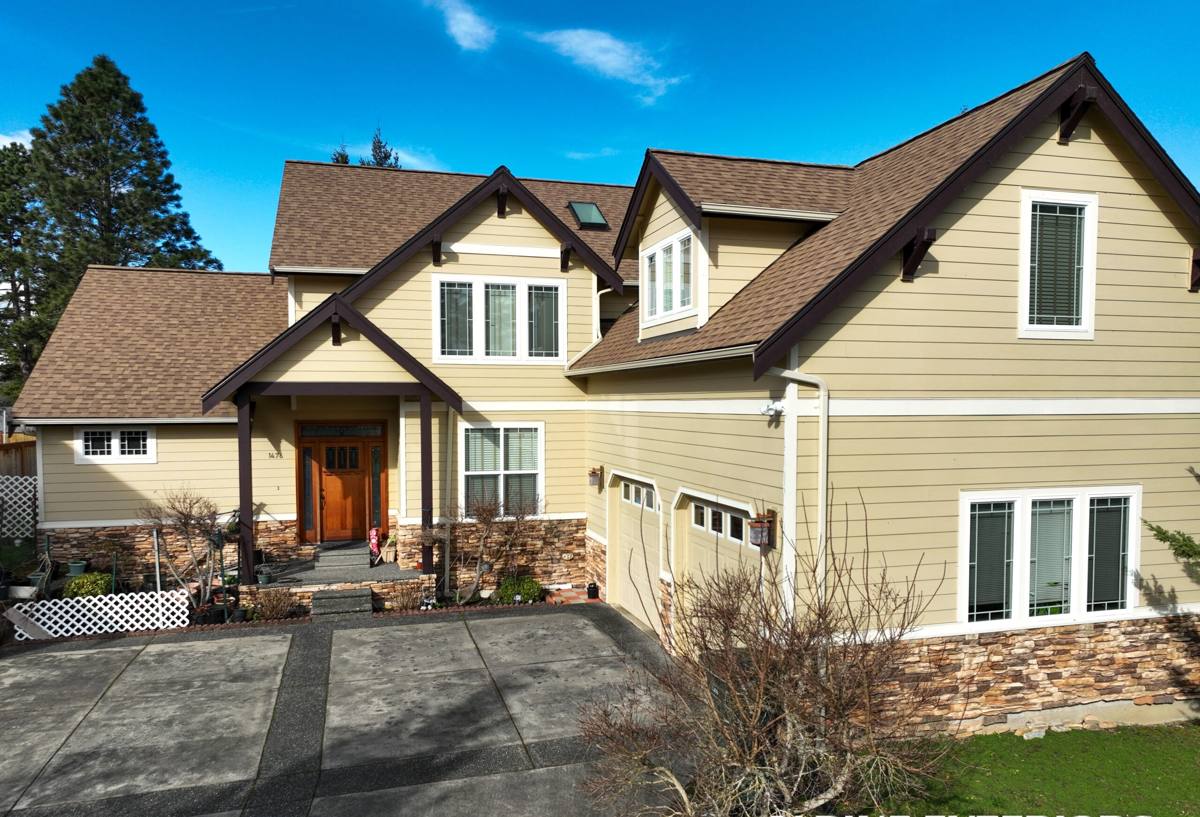
Signs a Lopez Village Home Needs Window Replacement
Not every window problem calls for full replacement — sometimes a re-caulk or hardware repair solves it. But certain signs point to the window itself being past the point of cost-effective repair:
- Fogging or a milky haze between panes of double-pane glass — the seal has failed and the gas fill (or simple dry air gap) is compromised; this cannot be fixed, only replaced
- Soft, spongy, or visibly rotted wood at the sill, sash bottom, or frame corners
- Windows that won't stay open, won't latch, or have become difficult to operate due to swelling or warping
- Persistent drafts you can feel with a hand near the frame on a windy day
- Moss or dark staining building up on the sill or lower sash that keeps returning after cleaning
- Visible daylight or gaps around the frame where it meets the siding or trim
- Condensation forming on the inside of the glass regularly, especially in cooler months
- Corroded or frozen hardware — latches, cranks, or balances that no longer function smoothly
If a home has two or more of these on multiple windows, it's usually more cost-effective to plan a phased or whole-house replacement than to keep patching individual units one at a time.
What a Correct Window Replacement Job Involves
Window replacement done right is as much about what happens around the window as the window unit itself. A high-quality window installed with poor flashing or a bad seal will fail early in this climate regardless of the product's rating. Here's what we treat as non-negotiable on every job:
Proper Flashing and Water Management
The single biggest cause of early window failure on the coast isn't the glass or the frame — it's water getting behind the window and having nowhere to go. Correct installation means flashing tape or pan flashing at the sill, integration with the home's weather-resistive barrier, and a drainage path so any water that does get past the exterior seal drains back out instead of sitting against wood framing. This is the detail that separates a window that lasts two decades from one that causes hidden rot within a few years.
Air Sealing and Insulation
Gaps between the window frame and the rough opening need to be sealed with an appropriate low-expansion foam or backer rod and sealant — not stuffed with fiberglass insulation alone, which does little to stop air movement. Proper sealing here directly affects both comfort and heating costs through the winter.
Level, Plumb, and Square Setting
A window that's out of square will bind, won't seal evenly, and puts uneven stress on hardware over time. This takes patience and shimming, not just setting the unit in the opening and fastening it down.
Exterior Trim and Sealant Detail
The finish sealant joint between the window and the siding or trim is a maintenance item — it's the first line of defense against wind-driven rain and it needs to be done with a sealant rated for exterior, coastal exposure, applied cleanly enough to actually last.
Material Choices That Make Sense for This Climate
We get asked often what the "best" window material is for a home near the water. The honest answer is that it depends on the home's style, budget, and how much maintenance the owner wants to take on — but some general trade-offs hold up consistently in San Juan County conditions.
| Frame Material | Coastal Performance | Maintenance | Typical Trade-Off |
|---|---|---|---|
| Vinyl | Good — won't rot or corrode, but can become brittle over many years of UV/salt exposure | Low | Budget-friendly; limited color and profile options versus wood or fiberglass |
| Fiberglass | Very good — dimensionally stable, resists the expansion/contraction that stresses seals | Low | Higher upfront cost than vinyl |
| Wood (clad exterior) | Good if the exterior cladding is intact; the wood core is protected from direct weather | Moderate — clad exterior is low-maintenance, but any breach in the cladding invites rot | Attractive interior wood look; higher cost, and damage to the exterior clad layer needs prompt attention |
| Solid wood, uncladded | Poor to fair — direct exposure to salt air and rain accelerates rot without diligent upkeep | High — regular painting/sealing required | Traditional appearance some owners want on period homes; requires real ongoing commitment |
| Aluminum | Fair — thermally inefficient and prone to corrosion pitting near salt air over time unless well-finished | Low to moderate | Slim sightlines; we're selective about where we recommend it here given the corrosion exposure |
For most Lopez Village homes, we steer conversations toward vinyl or fiberglass for straightforward, low-maintenance performance, or clad-wood when the homeowner wants a specific interior wood aesthetic and understands the cladding needs to stay intact. We're upfront that uncladded solid wood windows, while classic-looking, ask a lot of a homeowner in this environment — it's not that the material is bad, it's that the maintenance schedule needs to be realistic given the rain and salt exposure here.
Glass Packages and Performance
Beyond the frame, the glass package matters for comfort and condensation control. Double-pane, low-E glass is the practical standard for this climate — it cuts heat loss in the damp winter months and reduces UV fading on interior furnishings. For homes with more direct wind or noise exposure, a triple-pane option or laminated glass can be worth discussing, though it adds cost and weight that affects frame and hardware selection. We'll walk through what actually makes sense for a given home's exposure rather than defaulting to the most expensive package.
Our Window Replacement Process
- On-site assessment — we look at each window's current condition, the surrounding wall and trim, and any signs of hidden moisture damage before quoting anything
- Honest scope discussion — which windows genuinely need replacement now, which can wait, and which just need a repair or re-seal
- Material and glass selection — matched to the home's style, budget, and exposure, with trade-offs explained plainly
- Removal and opening inspection — checking framing and sheathing behind the old window for rot or damage before the new unit goes in, since this is often hidden until the old window comes out
- Flashing, installation, and air sealing — done to the standards described above, not shortcuts
- Exterior trim and sealant finish — a clean, weathertight finish detail
- Walkthrough — operation check on every window and a clear explanation of any care or maintenance the homeowner should know about
Why Local Experience on Orcas Island Matters
A crew that mostly works inland or in drier regions will often use the same flashing details and sealant choices everywhere, because those details are "good enough" for milder conditions. On Orcas Island and around Lopez Village, that approach shows its weaknesses within a few years — water finds the shortcuts. Working regularly in San Juan County means we're used to accounting for salt exposure in hardware and fastener choices, building in drainage for driving rain rather than just weatherproofing the surface, and recognizing early moss or algae growth as a moisture signal worth investigating rather than just a cosmetic issue to pressure-wash away.
It also means practical things like knowing what ferry and scheduling logistics mean for materials and timelines, and being realistic with homeowners about weather windows for exterior work in a place where a clear forecast can change quickly.
What to Check Before Hiring Anyone for Window Work Here
- Do they explain their flashing and water-management approach, or just talk about the window brand?
- Are they licensed and insured to do exterior work in Washington State?
- Will they inspect the framing behind old windows before quoting a firm price, or promise an exact number sight-unseen?
- Do they have experience with coastal/island conditions specifically, not just general window installation?
- Is the sealant and trim finish detail included and explained, or treated as an afterthought?
- Do they offer a written scope so it's clear what's being replaced, repaired, or left as-is?
Get a Straight Answer on Your Windows
If you're dealing with drafts, fogged glass, soft wood, or windows that just don't operate the way they used to, it's worth having someone look before deciding whether it's a repair or a replacement job. We offer free, no-pressure estimates for homes in Lopez Village and throughout the Orcas Island area — fill out the form below and we'll take a look and give you an honest read on what your windows actually need.