 Orcas Island
 Why Windows Fail Faster on Orcas Island Than Inland
Friday Harbor and the rest of San Juan County sit right in the path of everything Puget Sound weather can throw at a house: salt-laden air off the water, driving rain that comes in sideways during winter storms, and a damp, shaded off-season that keeps moss and algae established on north-facing walls and trim for months at a time. None of that is a problem a window has to face inland, and it changes what "good" window installation actually means out here.
Salt air is corrosive to raw aluminum hardware, unsealed fasteners, and cheap cladding finishes. Driving rain finds every gap in flashing and sealant that a calmer climate would never expose. And a long moss season means anything installed with poor drainage detailing stays wet longer than it should, which accelerates rot at the sill and jamb long before the glass itself ever fails. On Orcas Island and the surrounding San Juan Islands, a window installation that's "good enough" for a typical mainland subdivision often isn't good enough here.
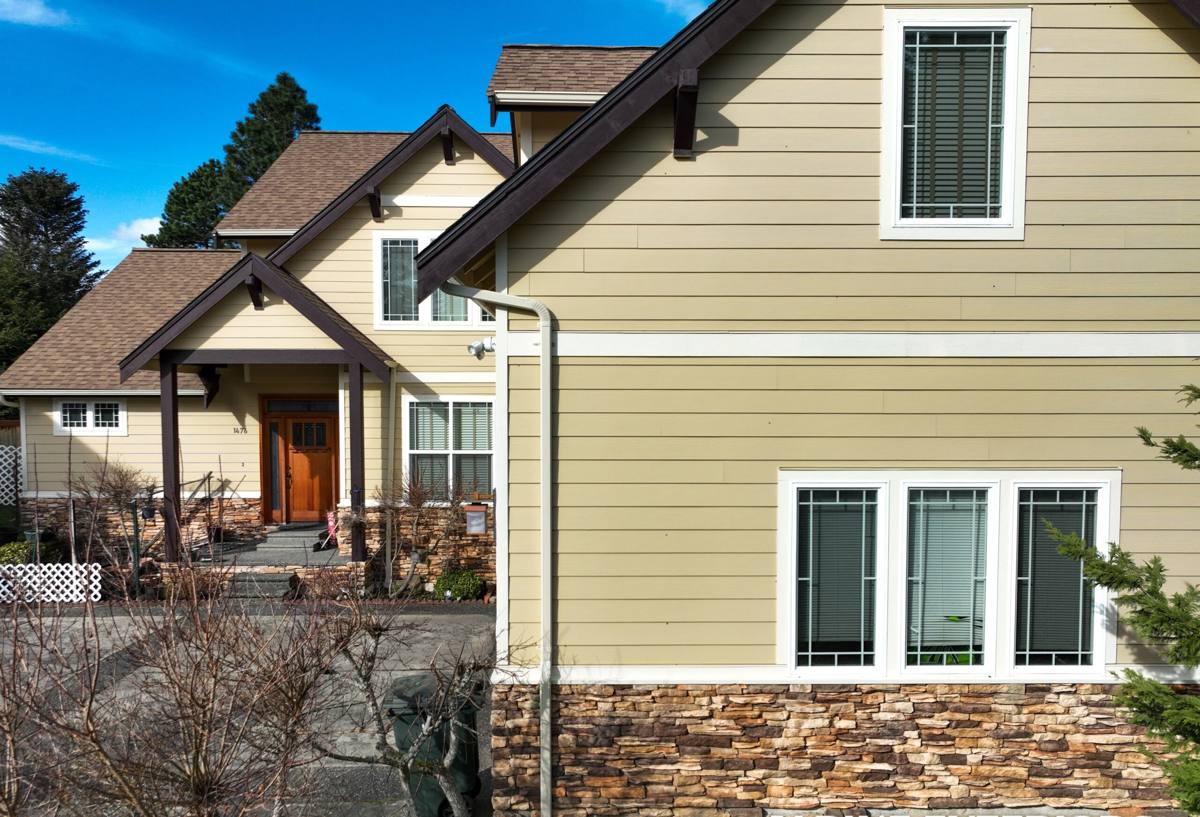
What a Correct Installation Actually Involves
Most window failures we get called out to replace weren't caused by bad windows — they were caused by a rushed or incomplete installation. The unit itself is often the easiest part. The flashing, sealing, and drainage details around it are what actually keep water out for the next twenty years.
The details that matter in a marine climate
- Proper flashing tape and pan flashing at the sill, lapped correctly with the house wrap so water sheds outward, not into the wall cavity
- A continuous weather-resistive barrier tie-in, not just caulk around the perimeter
- Backer rod and a quality exterior sealant rated for UV and salt exposure, not a bead of cheap caulk
- Shimming and squaring the unit so the sash operates correctly for the life of the window, not just on install day
- Corrosion-resistant fasteners — stainless or coated screws, not bare steel that will streak and weaken near the coast
- Insulation packed correctly around the frame without over-compressing it, which can bow the frame and cause air leaks
Skip any one of these and you don't usually see the problem right away. You see it two or three winters later, when water has been tracking behind the trim quietly the whole time.
Signs Your Current Windows Are Already Losing the Battle
Because water intrusion around windows is usually slow, most homeowners don't catch it until there's visible damage. A few things worth checking, especially on north- and west-facing walls that take the brunt of driving rain:
- Soft or discolored drywall, trim, or sill below the window
- Fogging or condensation between the panes of a double-pane unit — a sign the seal has failed
- Windows that are hard to open, close, or lock, which often means the frame has shifted or swollen
- Visible moss, black streaking, or algae buildup directly around the window frame or head flashing
- A noticeable draft or cold spot near the window on windy days
- Peeling paint or bubbling finish on the interior sill
Any one of these on its own isn't necessarily an emergency, but two or more on the same window usually means it's time for a real assessment rather than another round of caulk.
Choosing the Right Window for Friday Harbor Conditions
There's no single "best" window material — there's a best fit for your house, your budget, and how much maintenance you want to take on. In a salt-air, high-moisture climate, the trade-offs below matter more than they would somewhere drier and inland.
| Frame Material | How It Handles Salt Air & Moisture | Maintenance | General Cost Position |
|---|---|---|---|
| Vinyl | Won't corrode or rust; performs well near the water | Low — occasional cleaning | Most affordable |
| Fiberglass | Excellent — very stable in temperature swings and moisture, dimensionally strong | Low | Mid to upper range |
| Aluminum-clad wood | Good exterior protection if cladding is intact, but any breach exposes wood underneath | Moderate — watch seams and corners | Upper range |
| Bare wood | Requires the most upkeep in a wet, salt-air climate; attractive but higher risk of rot if neglected | High — regular refinishing | Varies widely |
We're generally cautious about recommending bare wood exteriors or cladding systems with a lot of seams on homes close to the water, not because the products are bad, but because they demand a level of upkeep a lot of homeowners don't realize they're signing up for until years two or three. Vinyl and fiberglass simply give you more forgiveness against salt air and long wet seasons with less ongoing maintenance.
Glass Packages Worth Considering
Beyond the frame, double-pane windows with a low-E coating and argon gas fill are a reasonable baseline for this climate — they help with both heat retention through cold, wet winters and glare control in summer. Homes with more direct west or water-facing exposure sometimes benefit from a higher-performance glass package, but that's a conversation worth having room by room rather than assuming every window on the house needs the same spec.
How Our Process Works
- Walkthrough and assessment. We look at each window individually — not every window on a house needs replacing at the same time, and we'll tell you honestly which ones do.
- Written estimate. You get a clear scope of work and pricing before anything is ordered, with no pressure to decide on the spot.
- Ordering and lead time. Windows are ordered to the exact opening size. We'll give you a realistic timeline that accounts for manufacturing and island delivery.
- Removal and prep. Old units come out carefully to protect interior finishes and siding, and we inspect the framing for any hidden rot before the new window goes in.
- Installation. Full flashing, sealing, and insulation detail as described above — not a quick swap.
- Final check. Every window is tested for smooth operation and a tight seal before we call the job done.
What Affects the Cost
Every house is different, but the main variables that move the price on a window installation in Friday Harbor are fairly consistent:
| Cost Factor | Why It Matters |
|---|---|
| Number of windows and openings | Straightforward economy of scale — more units per trip lowers per-window cost |
| Frame material | Vinyl is typically the most affordable; fiberglass and clad-wood cost more upfront |
| Existing framing condition | Hidden rot found during removal adds labor and material to repair before the new window goes in |
| Window size and style | Large picture windows, custom shapes, and operable units cost more than standard fixed sizes |
| Access and site conditions | Second-story or hard-to-reach openings take more time and equipment |
| Glass package | Upgraded low-E coatings or impact-rated glass add cost but can be worth it on exposed elevations |
We'd rather walk your home and give you real numbers than throw out a broad range that doesn't mean much once we're actually looking at your openings.
Why It Matters to Hire a Crew That Already Works on Orcas Island
Working on the San Juan Islands isn't the same as working on the mainland, and it's not just about the ferry ride. Material orders have to account for island delivery schedules, and a crew that's used to that plans ahead instead of leaving you waiting on a job that's half-started. A contractor who regularly works Friday Harbor and the surrounding islands also has a feel for which sides of a house take the worst weather, which older homes tend to have hidden rot behind the trim, and how much moss and algae buildup is normal versus a sign of a bigger moisture problem.
There's also a practical side: island logistics mean a mainland contractor unfamiliar with the ferry schedule and local supply lead times can turn a straightforward job into a drawn-out one. A crew already established here doesn't have to learn that on your project.
Protecting Your Investment After Installation
A correctly installed window shouldn't need much attention, but a little seasonal care goes a long way in this climate:
- Rinse salt residue off frames and glass periodically, especially on water-facing elevations
- Keep gutters and downspouts clear so water isn't sheeting down over window heads
- Clear moss and organic buildup from surrounding trim and siding before it holds moisture against the window frame
- Check and refresh exterior caulking every few years, since sealants break down under UV and salt exposure over time
- Test operable windows each season to catch any sticking or misalignment early
None of this takes much time, but skipping it is exactly how a well-installed window ends up with a moisture problem ten years earlier than it should.
If your windows are drafty, fogged, hard to operate, or you're just planning ahead for a home on the water, we're happy to take a look and give you a straightforward, no-pressure estimate. Use the form below to get started.