 Orcas Island
 Shaw Island Roofs Take a Different Kind of Beating
Shaw Island is small, quiet, and mostly tree-covered, which sounds like it should mean an easy ride for a roof. In practice it means the opposite. Homes here sit under heavy cedar and fir canopy that keeps roofs shaded and damp for long stretches of the year, while the same storms that roll through the San Juans bring driving rain and salt-laden wind off the water. That combination — shade, moisture, and salt air — is harder on a roof than open sun and dry wind ever would be, even if the wind speeds themselves aren't extreme.
Because Shaw Island is ferry-access only, roofs also tend to go longer between inspections than they would on the mainland. A loose ridge cap or a cracked pipe boot that would get caught early in a denser area can sit through two or three storm systems before anyone notices the ceiling stain inside. By the time storm damage is visible from the ground, there's usually already been water intrusion into the sheathing or insulation.
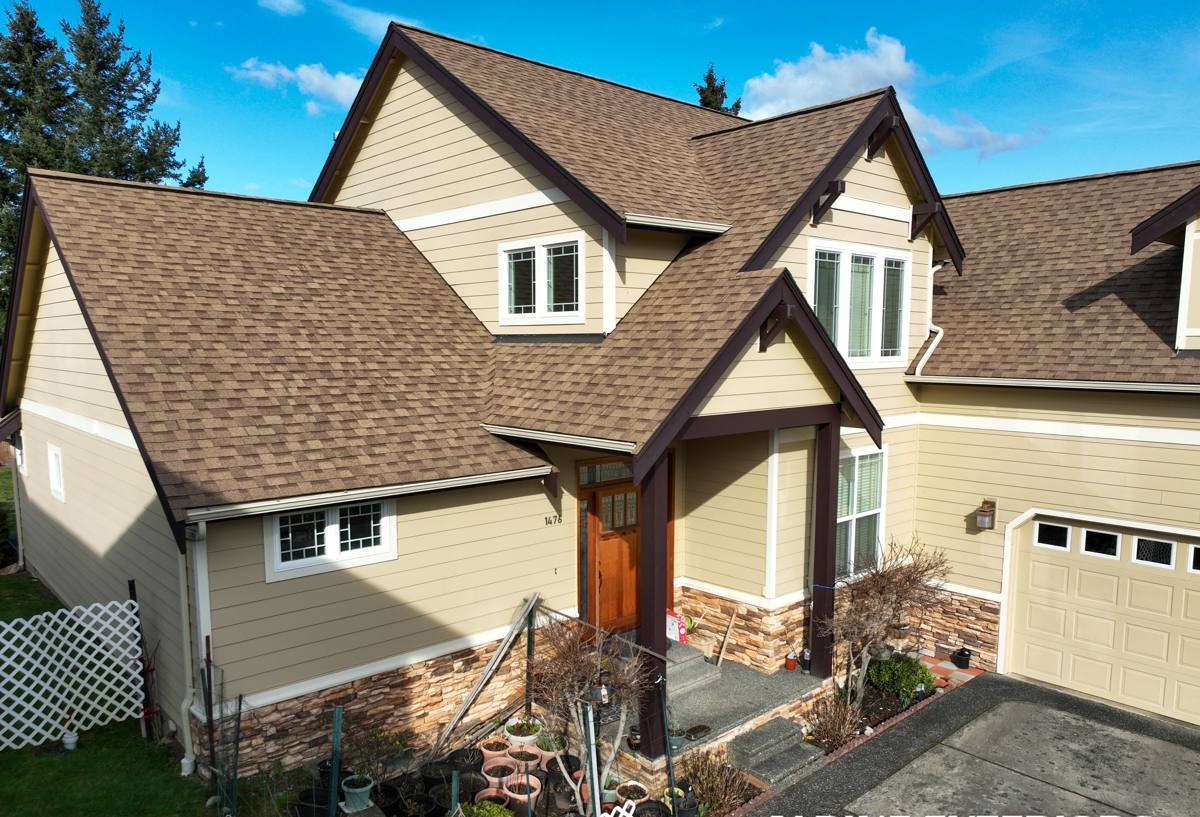
What Storm Damage Actually Looks Like on Shaw Island
Wind and Debris
Winter storms in San Juan County don't usually bring the sustained high winds you'd see on the outer coast, but gusts funneling between the trees and across open water on the island's shorelines can still lift shingle tabs, tear loose ridge and hip caps, and drive fir and cedar branches into a roof surface. A single branch strike can crack a shingle or shatter a section of cedar shake without ever punching all the way through — damage that's easy to miss from the yard.
Moss and Trapped Moisture
Shaw Island's tree cover means moss isn't a seasonal nuisance here, it's close to a year-round condition on north-facing slopes and anywhere shade lingers. Moss holds water against the roofing material long after a storm has passed, which softens shingles, rots the wood under cedar shakes, and works its way under flashing at valleys and penetrations. A lot of what looks like "storm damage" after a heavy rain is actually months of moss-driven saturation finally showing itself.
Salt Air and Metal Fatigue
Flashing, fasteners, gutters, and any exposed metal on a roof are all working against salt air here. Corroded or fatigued flashing around chimneys, skylights, and roof-to-wall transitions is one of the most common places we find active leaks after a storm — the flashing was already weakened, and the storm just found the weak point.
Flashing and Penetration Failures
Pipe boots, skylight seals, and step flashing are the most common failure points on any roof, and island weather accelerates their breakdown. A storm doesn't have to be severe to expose a flashing seal that was already cracking from age and salt exposure.
Why Response Logistics Matter Here
A storm-damaged roof on Shaw Island isn't a same-day fix for a crew that isn't already set up to work the islands. Ferry schedules dictate when a crew can get onto the island and, just as important, when they can get materials, tarps, and equipment there with them. A contractor who hasn't planned around ferry timing can lose most of a work day just getting a truck across, which matters a lot when a roof is actively leaking during the next storm in the forecast.
We build ferry timing into how we schedule Shaw Island storm calls: getting materials staged and loaded ahead of the crossing, planning the visit around tide and ferry windows, and, where a full repair can't happen immediately, getting a proper tarp-over done on the first trip so the interior stays protected until we're back with materials matched to the existing roof.
What a Correct Storm Repair Actually Involves
A rushed patch job is often worse than doing nothing, because it can trap moisture under a new layer instead of letting the roof dry and drain properly. A correct repair follows a sequence:
- Full roof assessment, not just the area that's visibly damaged — one leak often means checking the whole slope for related soft spots
- Removal of damaged material down to sound decking, checking for rot or delamination in the sheathing itself
- Flashing replaced or resealed at every penetration in the repair area, not just caulked over
- Underlayment repaired or replaced to restore the roof's actual water barrier, not just the visible surface
- New material matched as closely as possible to the existing roof in profile, color, and exposure
- Ventilation checked — a repair that ignores attic airflow can set up the next round of moisture problems
Skipping any one of these steps is how a "repair" turns into a repeat service call after the next storm.
Our Process for a Shaw Island Storm Call
1. Assessment
We inspect the full roof, not just the reported leak, and document what we find with photos — both for our own estimate and to support an insurance claim if you're filing one.
2. Stabilize
If the roof is actively leaking or exposed, we get a proper tarp or temporary seal in place on that same visit so the house isn't taking on more water while we plan the repair.
3. Estimate
You get a clear, itemized estimate covering material, scope, and timeline before any repair work starts — including whether a targeted repair makes sense or whether the damage points to a larger issue.
4. Repair
We schedule the repair around ferry access and weather windows, with materials staged ahead of time so the crew isn't losing a visit to logistics.
5. Documentation
You get photos and a written summary of the completed work, which matters both for your records and for any insurance claim tied to the storm event.
Repair or Replace: What Actually Drives That Decision
| Factor | Leans Toward Repair | Leans Toward Replacement |
|---|---|---|
| Extent of damage | Isolated to one section or penetration | Multiple areas or spread across slopes |
| Roof age | Under roughly 10-15 years, sound decking | Nearing or past expected material lifespan |
| Moss/moisture history | Recent problem, decking still solid | Long-term moss saturation with rotted sheathing |
| Flashing condition | Localized corrosion or failure | Widespread flashing fatigue across the roof |
| Material availability | Close match still available | Discontinued profile/color, patch will visibly mismatch |
Most storm calls on Shaw Island turn out to be legitimate repairs, not full replacements — but the only way to know for sure is an inspection that checks the decking and framing underneath, not just the surface material.
Preventing the Next Storm From Doing the Same Damage
Because tree cover and salt air are permanent conditions here, not one-time events, a storm repair that ignores the underlying causes just buys time until the next system rolls through. A few things make the biggest difference for Shaw Island roofs specifically:
- Keep gutters and valleys clear of needle and leaf debris — clogged drainage is one of the top causes of water backing up under roofing material
- Address moss on a schedule rather than waiting for it to become visible from the road; by the time moss is thick, it's already been holding moisture for a while
- Trim back branches with direct roof contact — even light, repeated branch movement in wind wears through shingles and shakes over time
- Have flashing and roof penetrations checked every year or two, since salt air corrosion is gradual and easy to miss until it fails
- Confirm attic ventilation is working — poor airflow keeps the underside of the roof deck damp even when the surface looks fine
Insurance and Documentation
Most homeowner policies cover sudden storm damage — wind-lifted shingles, branch strikes, wind-driven rain intrusion — but they typically exclude damage from long-term neglect, like a roof that failed because moss had been left unaddressed for years. That's part of why a thorough, photo-documented assessment matters: it establishes what was storm-caused versus what was a pre-existing condition, which affects whether a claim gets approved and for how much. We provide the documentation; the claim itself is between you and your carrier, but we'll answer an adjuster's questions about the scope of repair if asked.
Why Local Storm Experience on Shaw Island Matters
A contractor who only occasionally works the San Juan Islands has to relearn the ferry schedule, the material logistics, and the specific climate pressures every time they take a Shaw Island job. A crew that already works this island knows what moss damage looks like here versus a mainland roof, knows which flashing details fail first in salt air, and doesn't lose half a day figuring out how to get a truck and materials across the water. That familiarity shows up directly in how fast a leak gets stabilized and how well a repair holds through the next storm season.
If you've got storm damage, a suspicious ceiling stain, or just want a roof checked before the next system comes through, we're happy to take a look. Fill out the form below for a free, no-pressure estimate — there's no obligation, and it's the fastest way to find out whether you're looking at a simple repair or something bigger.