 Orcas Island
 Doe Bay's Climate Is Harder on Siding Than It Looks
Doe Bay sits on the exposed eastern shoulder of Orcas Island, where weather off the water meets a landscape that stays damp for months at a time. Homes here deal with three things at once: salt-laden air moving off the water, driving rain that hits siding sideways during winter storms, and a moss season that can stretch from October well into spring. Any one of those is manageable. Together, over years, they expose the difference between siding that was installed correctly and siding that was just installed.
Salt air is corrosive to exposed metal fasteners and trim, and it accelerates the breakdown of coatings that aren't built to handle it. Driving rain finds every gap in flashing, every under-caulked seam, and every place where siding was nailed too tight or lapped the wrong way. And moss doesn't just look bad — it holds moisture against the wall system, which is exactly what you don't want on a product that can't tolerate sustained dampness. A siding installation done for Doe Bay has to account for all three from day one, not patch for them later.
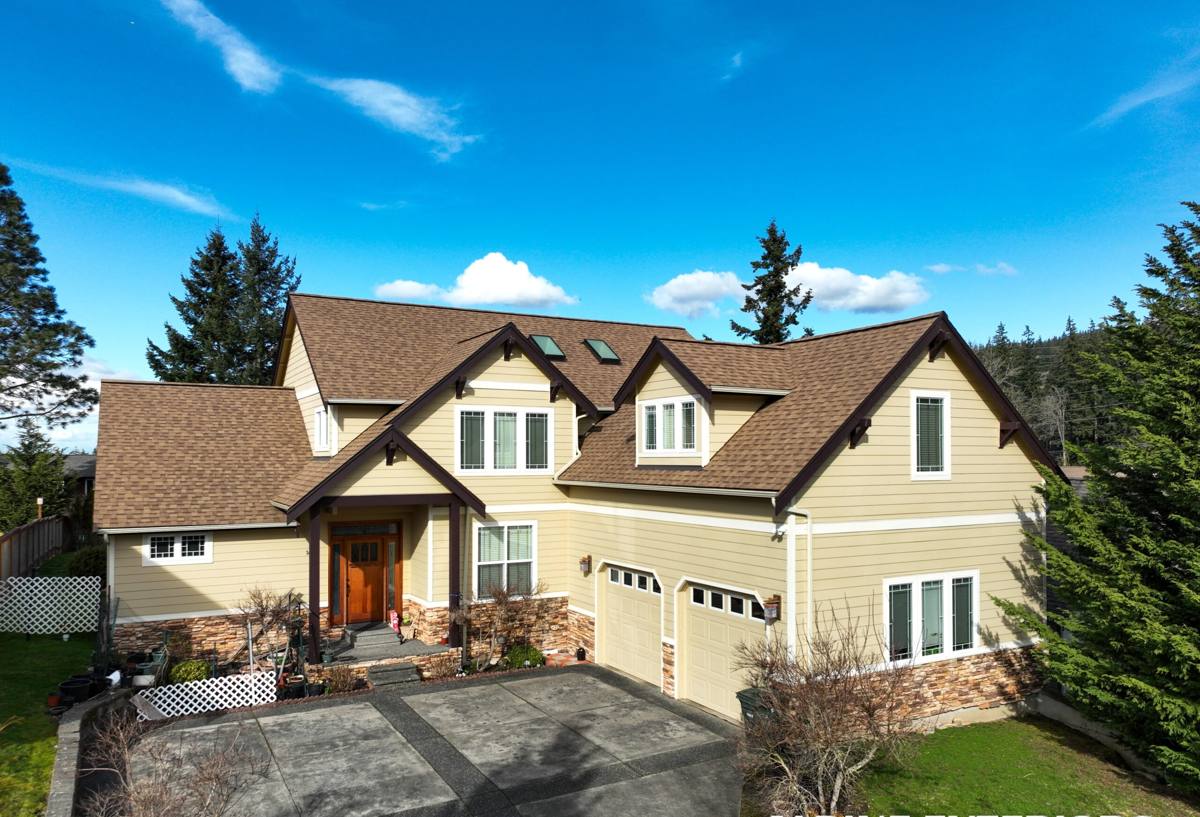
What Doe Bay Homes Actually Need From Their Siding
Before we talk about product or process, it helps to be specific about what "built for this climate" means in practice. On Orcas Island, and especially on a shoreline-adjacent property like most of what's in Doe Bay, siding needs to:
- Resist swelling, cupping, or delamination from prolonged exposure to wind-driven rain
- Hold a factory finish that doesn't chalk, fade, or need repainting every few years
- Shed moss and algae growth rather than absorbing and feeding it
- Tolerate salt-air exposure without the fasteners or trim corroding from behind
- Stay dimensionally stable through the wide humidity swings between summer and the wet season
Most siding failures we get called out to inspect on the island aren't dramatic. They're slow: a section that's stayed damp too long, trim that's started to soften at a butt joint, or a paint film that gave up years before the substrate did. San Juan County's marine climate doesn't punish siding all at once — it punishes shortcuts, patiently, until they show.
Why We Only Install James Hardie Fiber Cement
We don't install vinyl, LP SmartSide, Cemplank, Allura, or primed wood siding. That's a standard we apply to every job, not just the ones on Orcas Island — but it matters more here than almost anywhere else we work. Fiber cement doesn't feed moss the way wood-based products can, it doesn't have the seam and expansion issues that make vinyl a poor fit for wind-exposed sites, and it carries a factory-applied finish that's built to outlast field-applied paint.
ColorPlus Finish vs. Job-Site Painting
James Hardie's ColorPlus finish is baked on in a controlled factory environment, not brushed or sprayed on-site in whatever weather cooperates that week. That matters in a place where a painting window can close fast. A factory finish holds color and resists fading and chipping far longer than field-applied paint, which means fewer repaint cycles over the life of the siding — a real advantage when a property isn't easy to get a painting crew back out to on short notice.
Engineered for This Climate Zone
Hardie's HZ5 product line is engineered specifically for climates with prolonged moisture exposure, which describes the Pacific Northwest coast about as well as any region in the country. It's formulated and tested for performance in wet, humid conditions rather than being a general-purpose product pressed into service here. That distinction is exactly why we standardized on it instead of a cheaper alternative that performs fine in a dry climate but wasn't built for one like this.
| Climate Challenge in Doe Bay | How James Hardie HZ5 Responds |
|---|---|
| Driving, wind-blown rain | Dense fiber cement composition resists moisture intrusion at the panel itself |
| Long moss and algae season | Non-organic substrate doesn't feed growth the way wood-based products can |
| Salt air exposure | Factory finish and fastener guidance reduce corrosion-driven failures |
| Wide seasonal humidity swings | Dimensionally stable material resists swelling and cupping |
| UV and coastal sun exposure | ColorPlus baked-on finish resists fading and chalking |
What a Correct Siding Installation Actually Involves
The product is only half the equation. Fiber cement siding installed against Hardie's specifications performs the way it's supposed to for decades; the same material installed with shortcuts can develop moisture problems within a few years, regardless of how good the panels themselves are. A correct installation on a Doe Bay home includes:
- A water-resistive barrier installed continuously behind the siding, with proper laps and sealed penetrations
- A drainage plane or rainscreen gap so any moisture that gets behind the cladding can actually get back out
- Flashing at every window, door, and roof-to-wall transition — the places wind-driven rain actually finds a way in
- Correct fastener spacing, type, and penetration depth per Hardie's published installation guide
- Proper joint treatment and caulking at butt joints and trim, using products rated for the exposure
- Clearance from grade, decks, and roof lines to keep the bottom edge of the siding from sitting in standing moisture
Skipping any one of these doesn't usually cause an immediate problem. It causes a problem in year four or five, when the driving rain finally finds the gap that shouldn't have been there.
Our Installation Process
We approach every Doe Bay project the same structured way:
- On-site assessment — we walk the exterior, check the existing siding and sheathing for moisture damage, and look at exposure direction relative to prevailing wind and rain
- Moisture and substrate check — before new siding goes up, we confirm the wall assembly underneath is sound; covering a wet or damaged substrate with new siding just hides the problem
- Removal and prep — old siding comes off, sheathing repairs happen if needed, and the water-resistive barrier and flashing get installed correctly the first time
- Installation to Hardie spec — panels, fasteners, and trim installed following James Hardie's published guidelines for this climate zone, not generic best guesses
- Final inspection and walkthrough — we check joints, caulking, and clearances before calling the job done
Cost Factors for Doe Bay Siding Installation
Every home is different, so we don't quote broad averages that don't mean much until we've actually seen the property. What we can tell you is what tends to move the price on a project like this:
| Factor | Why It Matters |
|---|---|
| Home size and wall complexity | More square footage and more corners, gables, and trim detail mean more material and labor |
| Condition of existing siding and sheathing | Hidden moisture damage found during removal adds repair scope before new siding can go up |
| Access and staging on the island | Material deliveries and equipment staging take more planning here than on the mainland |
| Trim and detail package | Corner boards, window trim, and accent details all add labor and material |
| Exposure and elevation | Sides facing prevailing wind and rain may warrant extra flashing and joint attention |
Working on Orcas Island: Access and Logistics
Every siding job on the island involves logistics that don't come up on the mainland. Materials, equipment, and crews all move by ferry, which means a project timeline has to account for sailing schedules rather than assuming same-day availability if something needs to be reordered. A crew that regularly works Doe Bay and the surrounding parts of Orcas Island plans material orders further ahead, batches deliveries efficiently, and doesn't get caught mid-project waiting on a part that should have been on-site already. That planning is invisible when it goes right — but it's the difference between a project that stays on schedule and one that stalls waiting on the next sailing.
After Installation: What Doe Bay Siding Needs Long-Term
Correctly installed James Hardie siding is low-maintenance, not no-maintenance. A little seasonal attention goes a long way toward getting the full life out of it in this climate:
- Rinse salt spray and airborne grime off exterior walls periodically, especially on sides facing open water
- Keep gutters and downspouts clear so overflow doesn't run down the face of the siding
- Address moss or algae growth early with a gentle wash rather than letting it establish
- Inspect caulking at joints and trim annually and re-caulk any sections that have cracked or pulled away
- Keep vegetation trimmed back from walls to maintain airflow and reduce prolonged dampness against the siding
Why Hire a Crew That Already Works Doe Bay
Siding installation isn't a one-size-fits-all trade, and a crew that mainly works inland, drier climates will make different assumptions than one that works this coastline regularly. Knowing how hard the wind drives rain from a particular direction, how long moss season actually runs here, and how to plan materials around ferry logistics all come from doing this work on Orcas Island specifically — not from a general contracting background applied to a new location. That local pattern recognition shows up in the details: where extra flashing gets added without being asked, which elevations get the closest attention during installation, and how a project timeline gets built around the realities of getting here in the first place.
If you're planning a siding project for a home in Doe Bay, we're happy to walk the property, look at what your current siding is telling us, and put together a straightforward plan and estimate — no pressure, no obligation.