 Orcas Island
 Siding Built for Rosario's Marine Climate
Rosario sits close to the water on Orcas Island's east side, which means homes here take a different kind of beating than a house inland. Salt-laden air moves off the water and settles on exterior surfaces year-round. Driving rain off Rosario Strait hits siding at an angle, not straight down, which pushes moisture into laps, seams, and fastener points that a calmer climate would never stress. And because this part of San Juan County stays cool and damp for much of the year, moss and algae get a long runway to establish themselves on anything that holds moisture or sits in shade.
None of that is unusual for the San Juans. But it does mean siding installation in Rosario isn't a generic job — the material choice, the flashing details, and the installer's attention to moisture management all matter more here than they would in a drier, inland town. This page covers what a correct siding installation looks like for a Rosario home, and why we install one product system across every job we take on the island.
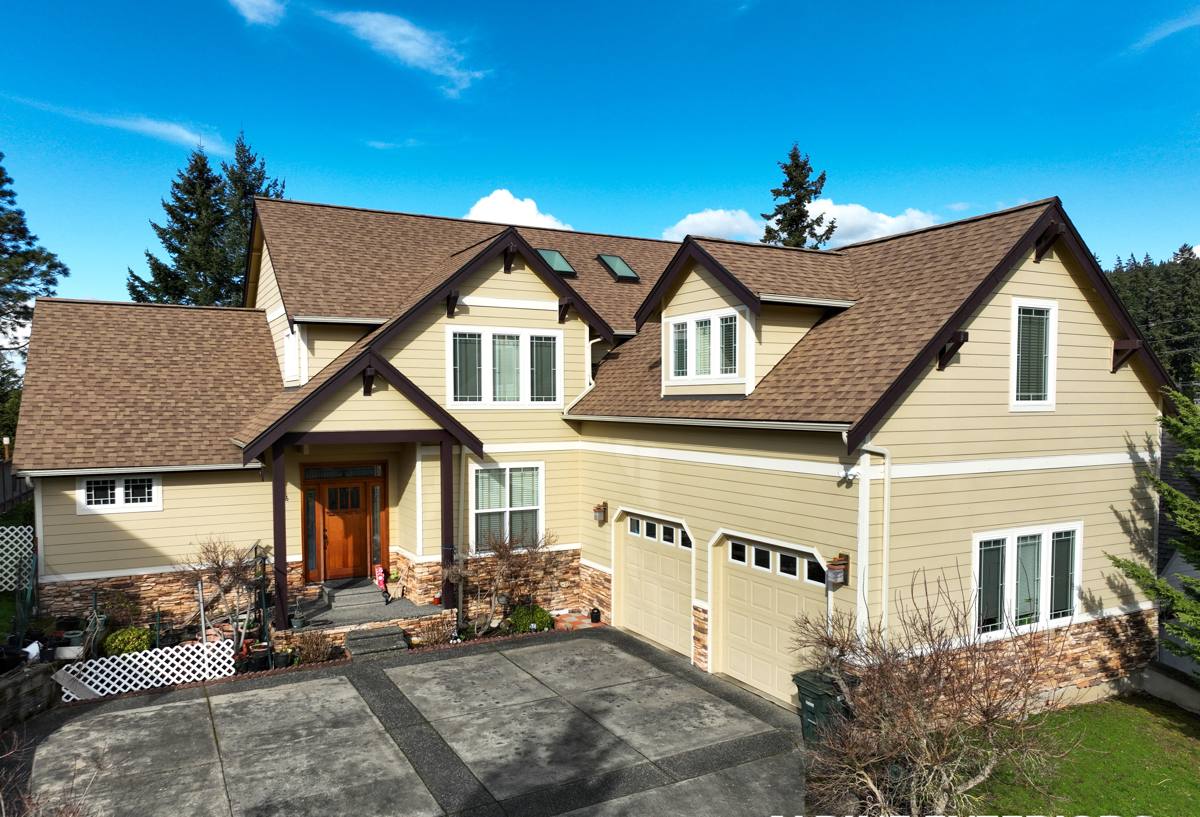
What Salt Air, Rain, and Moss Actually Do to Siding
Salt Air
Airborne salt is corrosive to metal fasteners and trim, and it's abrasive to painted or coated surfaces over time. Siding products that rely on a surface-applied paint film tend to chalk, fade, and lose adhesion faster in a salt-air environment because the salt accelerates the breakdown of the coating. Once the coating starts failing, the substrate underneath is exposed to everything else on this list.
Driving Rain
Wind-driven rain doesn't just wet the face of the siding — it gets forced sideways and upward at laps, corners, and penetrations (hose bibs, light fixtures, vents). If those details aren't flashed and sealed correctly, water works its way behind the siding and into the wall assembly. On a marine-exposed lot like much of Rosario, this is the single biggest factor separating a siding job that lasts twenty-plus years from one that starts showing rot behind the walls in five.
Moss and Algae
San Juan County's wet, mild winters and shaded, tree-covered lots common around Rosario give moss and algae exactly what they need: consistent moisture and limited direct sun. Wood-based siding products are especially vulnerable because moss holds moisture directly against an organic substrate. Even non-wood products need the right finish and enough of a rain-screen gap behind them to dry out between storms, or they'll stay damp long enough for growth to take hold anyway.
Why We Install Only James Hardie Fiber Cement
We don't install vinyl, LP SmartSide, primed wood, cedar, or other fiber cement brands. That's a deliberate standard, not a sales pitch, and it comes directly from what we've seen hold up — and what doesn't — in this climate.
- Non-combustible: Fiber cement doesn't feed a fire the way wood-based products can, which matters anywhere in the San Juans where wildfire risk and rural fire response times are a real consideration.
- Engineered for moisture, not just painted against it: James Hardie's HZ5 product line is formulated for wetter, harsher climates like the Pacific Northwest coast — the material itself resists moisture-driven swelling and delamination better than wood-based composite sidings.
- Factory-baked finish: ColorPlus coating is cured onto the board in a controlled factory process, not brushed or sprayed on site. That gives it better adhesion and UV/color stability than field-applied paint, which matters when salt air is working against the finish every day.
- Doesn't feed moss the way wood does: Fiber cement is inorganic. Moss and algae can still grow on its surface if conditions are damp enough, but the board itself won't rot or soften the way a wood-based substrate will once organic growth takes hold.
- Warranty that transfers: Hardie's product warranty is transferable to a new owner, which matters on the island where vacation and second-home properties change hands more often than in a typical neighborhood.
We're not going to tell you vinyl or LP SmartSide are junk — they're not, and they work fine in a lot of climates. But we've made a professional call that in a marine environment like Rosario, with salt exposure, driving rain, and a long moss season, fiber cement engineered for this exact climate is the product we're willing to put our name behind. That's why it's the only thing we install.
What a Correct Siding Installation Involves
The board itself is only part of the job. A siding installation that actually holds up in Rosario's conditions depends just as much on what's underneath and behind it.
Weather-Resistive Barrier and Rain Screen
Every installation starts with a properly lapped weather-resistive barrier over the sheathing. In a driving-rain environment, we build in a drainage gap (rain screen) behind the siding wherever the assembly calls for it, so any moisture that does get past the face of the board has somewhere to drain and dry instead of sitting against the wall.
Flashing at Every Penetration
Windows, doors, hose bibs, vents, and any other penetration through the wall plane gets flashed so water is directed out and down, never trapped behind the siding. This is the detail that separates a job that lasts from one that fails early — and it's invisible once the siding is up, which is exactly why it matters who's doing it.
Fasteners and Hardware
In a salt-air environment, fastener corrosion resistance isn't optional. We use fasteners rated for the exposure and follow Hardie's fastening specifications (type, spacing, embedment) exactly — under-driven or over-driven nails are one of the most common causes of early siding failure, and it's a detail that's easy to get wrong if a crew is used to installing a different product.
Joints, Laps, and Caulking
Butt joints get flashed or backed per spec, laps are set to the correct reveal, and caulking is used only where Hardie's installation instructions call for it — not as a substitute for proper flashing. Over-caulking is a common shortcut that traps moisture instead of shedding it.
Our Process for a Rosario Siding Job
- On-site assessment: We walk the exterior, check current siding condition, look for existing moisture damage or rot, and note exposure factors specific to your lot — tree cover, prevailing wind and rain direction, proximity to the water.
- Written estimate: You get a clear scope and price before any work starts, including which Hardie product line and profile fits the home.
- Tear-off and inspection: Old siding comes off and we inspect the sheathing and framing underneath. Any rot or damage gets addressed before new siding goes up — covering a problem is worse than finding it.
- Barrier and flashing installation: Weather-resistive barrier, rain screen where applicable, and flashing at every penetration, done to spec before a single board is hung.
- Siding installation: Hardie boards installed to manufacturer fastening and clearance specifications, including ground clearance and gutter/roof line clearances that matter in a wet climate.
- Final walkthrough: We go over the finished job with you, including basic care and what to watch for in the years ahead.
Why It Matters That We Already Work Rosario
A crew that only occasionally works the San Juans will often default to whatever flashing and fastening approach works fine on the mainland. That's not usually enough here. A crew that's done siding installation work around Rosario knows to plan for salt exposure on hardware, to size the rain screen for actual driving-rain conditions rather than a textbook minimum, and to expect moss pressure on shaded elevations from day one — so those elevations get detailed accordingly instead of becoming a callback two years later.
Logistics matter too. Material deliveries, scheduling around ferry availability, and sequencing work around island weather windows are all things that go smoother when a crew already has a rhythm for working out here, instead of learning it on your project.
Cost Factors for Rosario Siding Installation
Every home is different, but these are the main variables that move the price on a Rosario siding job:
| Factor | Why It Affects Cost |
|---|---|
| Home size and wall complexity | More square footage, more corners, gables, and dormers all mean more material and labor |
| Current siding removal | Tear-off and disposal of existing siding adds labor, especially if hazardous materials (old paint, etc.) are involved |
| Sheathing/framing repair | Rot or moisture damage found during tear-off has to be repaired before new siding goes on |
| Hardie product line and profile | Lap width, panel style (shingle, board-and-batten, plank), and trim details affect material cost |
| Site access | Steep lots, limited staging area, and ferry-dependent material delivery can add logistics cost on the island |
| Color and finish | ColorPlus factory finishes vs. field-painted primed board affect both material cost and long-term maintenance |
A Simple Maintenance Checklist for Rosario Homes
Even the right product installed correctly benefits from basic upkeep in this climate:
- Rinse siding annually to remove salt film and organic buildup, especially on shaded or water-facing elevations
- Keep gutters clear so water isn't overflowing onto siding below
- Trim back vegetation and tree limbs that keep siding shaded and damp
- Check caulking at trim and penetrations every couple of years and have any gaps addressed
- Watch for moss or algae starting on north-facing or heavily shaded walls and address it early rather than letting it establish
- Have any impact damage (branches, debris) inspected promptly rather than waiting for the next scheduled look
Get an Estimate for Your Rosario Home
If your siding is showing its age, or you're planning ahead for a replacement, we're happy to come take a look and give you a straight answer on what your home needs. Reach out for a free, no-pressure estimate using the form below.