 Orcas Island
 Building Decks That Actually Hold Up in Rosario
Rosario sits close enough to the water that salt air is part of daily life, and that changes how a deck should be built. We've worked on homes throughout this part of Orcas Island long enough to know that a deck built the way it would be built inland — say, in a dry valley on the mainland — doesn't last here. Fasteners corrode faster, wood surfaces stay damp longer between rains, and moss finds a foothold in any spot that doesn't get sun or airflow. A deck that's going to serve a Rosario home for decades has to be designed around those realities from the start, not patched to deal with them later.
This page focuses specifically on custom deck construction for homes in and around Rosario — what the local climate demands, what a properly built deck actually involves, and how we approach the work so it holds up rather than becoming a five-year maintenance headache.
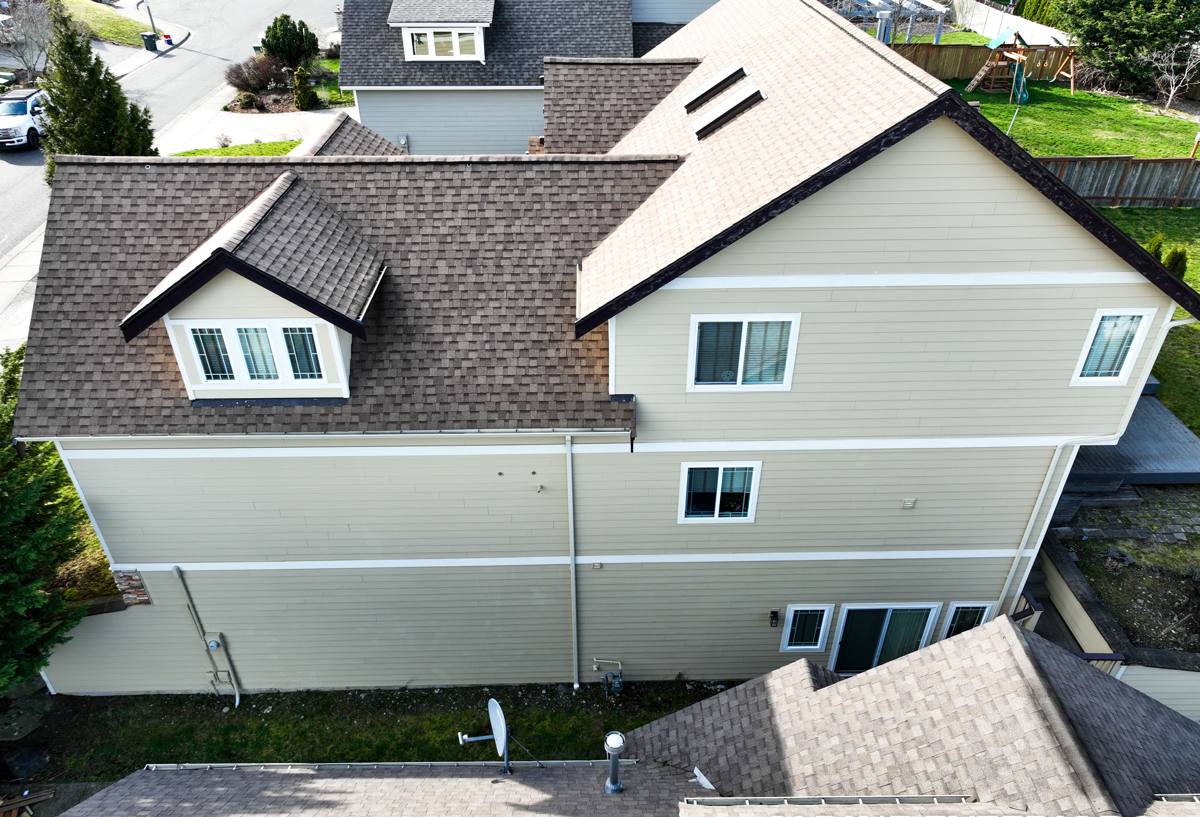
What San Juan County Weather Does to a Deck
San Juan County's marine climate is mild compared to a lot of Washington, but "mild" doesn't mean easy on building materials. Three things matter most for decks specifically:
- Salt air: Airborne salt accelerates corrosion on any exposed metal — nails, screws, joist hangers, railing hardware. Standard hot-dip galvanized fasteners can start showing rust streaks within a couple of seasons this close to the water.
- Driving rain: Storms here often come with wind, which drives rain sideways into ledger boards, stair stringers, and any horizontal surface that isn't sloped to shed water. Standing water on a deck board is where rot starts.
- A long moss season: Shaded, north-facing, or tree-covered decks in this area can stay damp for months at a stretch, especially fall through spring. Moss and algae take hold on any surface that doesn't dry out regularly, and they hold moisture against the wood or composite surface underneath.
None of this means a deck can't be built well here — it means the design, the materials, and the fastener choices all need to account for it up front.
Why "Standard" Deck Hardware Falls Short Near the Water
A lot of deck failures we get called out to inspect trace back to hardware, not the decking itself. Basic galvanized coating is fine for most inland applications, but in a marine-influenced environment like Rosario it's often not enough. We spec stainless steel or a higher-grade coated fastener system for structural connections — joist hangers, ledger bolts, post bases — because that's where a failure actually matters structurally, not just cosmetically.
What a Correctly Built Deck Involves
A deck is a structure first and a surface second. Getting the structure right is what determines whether it's still solid in fifteen years.
Ledger Attachment and Flashing
Where the deck attaches to the house is the single most common source of long-term water damage, and it's the detail most likely to be done poorly on a rushed job. Proper flashing — installed so water sheds away from the house band board rather than behind it — is non-negotiable in a climate that sees this much sustained rain. We flash every ledger connection whether the deck is 8 feet off the ground or resting near grade.
Footings and Post Bases
Frost depth in San Juan County is shallower than a lot of Washington, but footings still need to be sized and set correctly for the soil conditions on the specific lot — some Rosario-area properties sit on rockier ground, others on more organic, moisture-retentive soil, and that affects how footings are dug and poured. Post bases should sit above grade on a standoff bracket so the post end never sits in standing water.
Framing and Spacing
Joist spacing, blocking, and beam sizing all need to match the actual span and the decking material you're putting on top — composite decking generally wants tighter joist spacing than solid wood. Airflow underneath the deck matters too; a deck built low to the ground with poor ventilation underneath is a moss and mildew problem waiting to happen, even if the top surface looks fine.
Decking Surface and Drainage
Boards should be gapped and run to drain, not laid flat and tight. Any low spots where water can pool are where algae and moss establish first, and where wood decking will eventually cup or rot.
Choosing a Decking Material for This Climate
There isn't one "right" material for every project — it depends on budget, maintenance appetite, and how much sun or shade the deck gets. Here's how the common options actually perform in a Rosario-type environment:
| Material | Moss/Algae Resistance | Maintenance | Notes for This Climate |
|---|---|---|---|
| Pressure-treated wood | Low — needs regular cleaning | Annual cleaning, periodic sealing | Lowest upfront cost; most vulnerable to moss buildup in shaded, damp spots |
| Cedar | Moderate | Periodic oiling/sealing to maintain color and resistance | Natural oils help some, but still needs upkeep near salt air |
| Composite decking | Higher, but not immune | Occasional washing; no sealing/staining | Performs well in wet climates; quality varies a lot between brands and price tiers |
| PVC/capped composite | Highest of common options | Lowest — mainly rinsing | Best moisture resistance; higher upfront cost |
We'll walk through these trade-offs honestly during an estimate rather than pushing whichever product has the best margin. A shaded, north-facing deck in Rosario is a very different decision than a sun-exposed deck on the same street.
Railing and Hardware Materials
Railings take direct weather exposure and a lot of hand contact, so material choice matters here too. Powder-coated aluminum and stainless cable systems both hold up well to salt air with minimal upkeep. Wood railings look great but need the same sealing schedule as the rest of the wood on the structure — skipping that is how railings start looking tired years before the deck frame does.
Our Process for a Rosario Deck Project
- On-site assessment: We look at sun exposure, drainage, existing structure (if it's a replacement), and how the space will actually be used before recommending anything.
- Design and material selection: We walk through decking, railing, and fastener options against your budget and maintenance preferences — no upselling toward the most expensive option by default.
- Permitting: Deck projects in San Juan County often require a permit depending on size, height, and location relative to setbacks or shoreline buffers. We handle that process so it isn't left to you to figure out.
- Structural build: Footings, framing, ledger flashing, and post bases go in first, built to the spans and loads the design calls for.
- Surface and railing installation: Decking, fascia, and railing systems go on last, with attention to drainage and gapping.
- Final walkthrough: We go over the finished deck with you, including what maintenance (if any) the material you chose will need going forward.
Maintenance That Actually Matters Here
Every deck material has some level of upkeep, and being upfront about that is part of doing honest work. For Rosario homes specifically, the maintenance items that matter most are:
- Clearing debris and standing moisture from board gaps before it accumulates, especially heading into fall
- Rinsing or lightly scrubbing shaded areas where moss tends to establish first
- Checking hardware and railing connections annually for early corrosion, particularly on decks facing open water
- Re-sealing wood surfaces on the schedule appropriate to the product (varies by material — we'll tell you the real schedule for what you chose, not a generic one)
- Keeping nearby vegetation trimmed back so the deck surface gets airflow and some sun exposure
Why Hire a Crew That Already Works This Area
A deck built by someone unfamiliar with San Juan County conditions can look fine on installation day and still have problems within a couple of winters — wrong fastener grade, poor ledger flashing, decking laid without enough drainage slope. We've built and repaired decks around Orcas Island long enough to know which details actually matter in this specific environment versus which ones are just generic best practices copied from a drier region. That local experience shows up in the fastener specs we use, how we detail flashing, and which materials we'll actually recommend for a shaded, salt-exposed lot versus a sunny one.
We also know the permitting process for San Juan County, which saves time and avoids the back-and-forth that comes from a design that doesn't account for local requirements from the start.
Get an Estimate
If you're planning a new deck or need to replace one that's showing its age, we're happy to take a look and give you a straightforward assessment — what your site needs, what materials make sense for your exposure and budget, and a real cost range. Reach out through the form below for a free, no-pressure estimate.