 Orcas Island
 Windows on Obstruction Pass Face a Different Kind of Wear
Obstruction Pass sits close enough to the water that homes there take a steady diet of salt-laden air, wind-driven rain, and long stretches of shade and moisture that keep everything from siding to window sills damp well after a storm has passed. That combination doesn't just age windows faster than it would in a drier inland climate — it changes what "correct installation" actually means. A window that's flashed and sealed for a typical suburban lot can still fail here within a few years if the crew installing it isn't thinking about wind-driven rain intrusion, corrosion-resistant hardware, and the shade patterns that keep moss and moisture sitting on a sill or sash longer than they should.
We install windows on Orcas Island year-round, and Obstruction Pass is one of the areas where we've learned to plan for conditions most manufacturers' installation instructions don't fully account for. This page covers what that means in practice — for the windows themselves, for the installation, and for how we run the job.
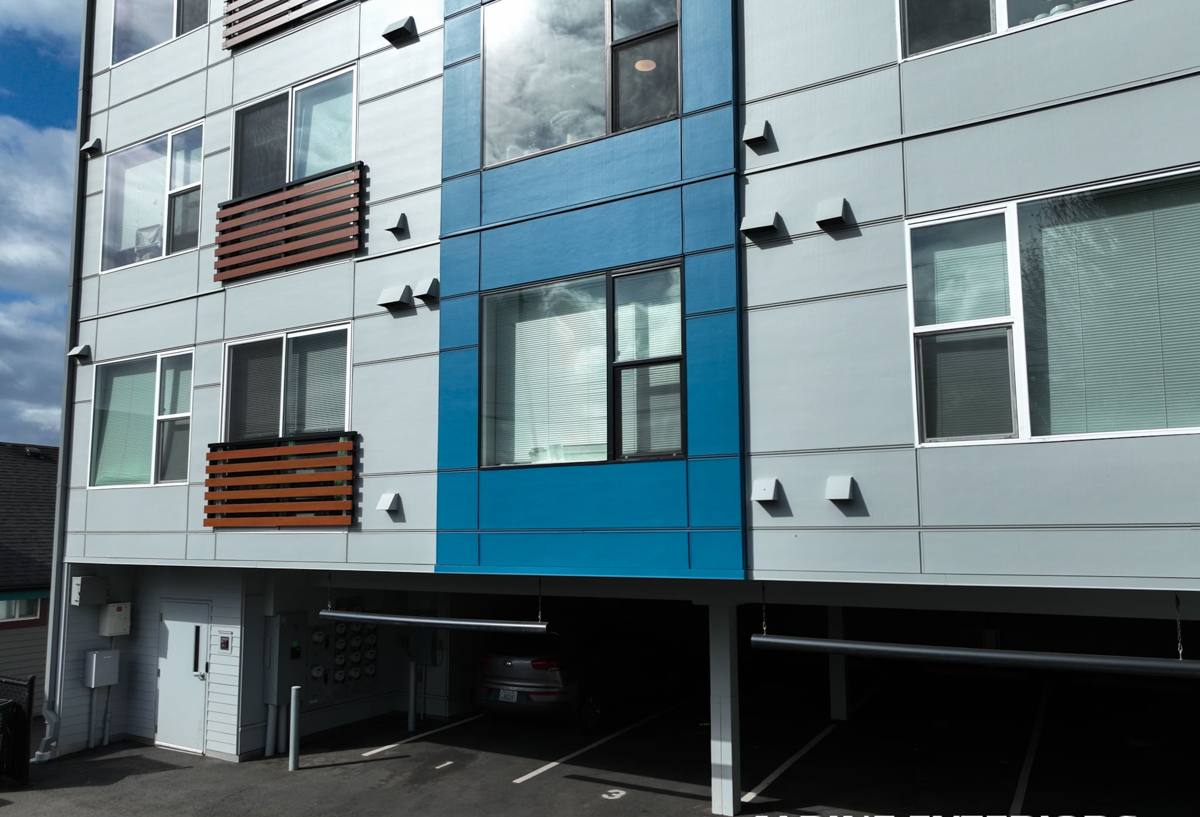
What Salt Air, Rain, and Moss Actually Do to Windows Over Time
Salt Air and Metal Hardware
Salt in the air accelerates corrosion on anything metal — hinges, cranks, locks, screws, and lesser-grade aluminum cladding. On homes closer to the shoreline, we routinely see hardware that's seized up, pitted, or streaking rust down a sash years before the glass unit itself has failed. It's a slow process, which is why it's easy to overlook until a window that used to open smoothly suddenly won't budge.
Driving Rain and Wind-Driven Water
San Juan County storms don't always come straight down. Wind off the water pushes rain sideways and up under trim, which means a window's weakest point usually isn't the glass — it's the perimeter. Flashing, sealant lines, and the drainage path behind the trim have to be built to handle water hitting the window from angles a lot of standard installations never plan for.
Moss, Shade, and Standing Moisture
Wooded lots and the shorter daylight hours of a Pacific Northwest winter mean some walls and sills almost never fully dry out between rains. That's exactly the environment moss and mildew like, and it's also the environment where untreated wood trim, poorly sealed nailing fins, and cheap composite sills soften and fail early. A window that would be fine on a sunny, exposed wall can struggle on a shaded, damp one.
Choosing the Right Window for an Obstruction Pass Home
There's no single "best" window brand for coastal Orcas Island — the right choice depends on your home's exposure, budget, and how much upkeep you want to do. What we steer people toward, and away from, comes down to how each frame material actually behaves in salt air and sustained moisture, not marketing claims.
| Frame Material | How It Handles This Climate | Trade-Offs to Know |
|---|---|---|
| Fiberglass | Very stable in temperature swings and moisture; doesn't corrode or rot; holds paint well if you want a custom color | Higher upfront cost than vinyl |
| Vinyl (quality-grade) | No corrosion risk, good moisture resistance, budget-friendly | Can expand/contract more in temperature swings; color options are limited without repainting |
| Wood (clad or unclad) | Classic look, good insulator | Highest maintenance burden in this climate — unclad wood needs vigilant sealing and repainting to resist moss and rot near shaded, damp walls |
| Aluminum | Strong and slim sightlines | Poor insulator and more prone to corrosion pitting in salt air over time; we generally don't recommend it this close to the water |
For most Obstruction Pass homes, we lean toward fiberglass or a well-built vinyl unit with stainless or corrosion-resistant hardware. If you love the look of wood, clad-exterior wood windows (wood interior, protective exterior cladding) give you that look without exposing raw wood to the weather side.
Glass and Glazing
Double-pane, low-E glass is the practical baseline here — it cuts heat loss in winter and reduces glare and UV fading in summer. Argon-filled units add a modest efficiency bump. We don't push triple-pane on every job; on a lot of Orcas Island homes the cost doesn't pencil out against the marginal gain, but we'll walk through it if you're building for maximum efficiency or facing a particularly exposed wall.
What a Correct Installation Actually Involves
The window unit itself is maybe half the equation. The other half — and the part that determines whether you get 20+ years out of the install or a leak in three — is how the opening is prepared and sealed.
Removal and Opening Inspection
We don't just pull the old window and drop in the new one. Once the old unit is out, we inspect the framing, sill, and sheathing for hidden rot or moisture staining — common on older Orcas Island homes where a prior installation skipped proper flashing. Any soft or damaged wood gets addressed before a new window goes in; installing a new window into a compromised opening just guarantees a repeat failure.
Flashing and Water Management
This is the step that matters most in a driving-rain climate. Proper flashing tape and a correctly lapped water-resistive barrier direct any water that gets behind the trim back out, rather than into the wall cavity. We pay particular attention to the sill pan — the bottom of the opening — since that's where water collects and where a shortcut shows up first as a rot problem years later.
Air Sealing and Insulation
Gaps around the window frame are sealed with low-expansion foam or backer rod and sealant rather than packed with fiberglass insulation alone, which does nothing to stop air infiltration. This step affects both your energy bill and how much condensation shows up on interior glass during cold, damp stretches.
Exterior Sealant and Trim
We use sealants rated for the temperature range and UV exposure they'll actually see, and we finish trim in a way that sheds water rather than collecting it — small details like backslope on a sill or a drip cap above a window head make a real difference over a decade of Pacific Northwest weather.
Our Process for an Obstruction Pass Window Job
- On-site assessment: We look at each window's exposure, current condition, framing, and any signs of past water intrusion before quoting anything.
- Product selection: We walk through frame material, glazing, and hardware options based on your budget and how exposed that particular wall is.
- Scheduling around the weather and the ferry: We plan install windows around drier stretches where possible and build in ferry travel time so a delayed sailing doesn't turn into a delayed job.
- Removal and opening repair: Old units come out, the opening gets inspected, and any rot or damage is repaired before anything new goes in.
- Installation: New flashing, sill pan, insulation, and the window unit itself, installed level, plumb, and square.
- Exterior finish and sealing: Trim, caulking, and paint or stain matched to the rest of the home's exterior.
- Final walkthrough: We test operation, check the seals, and make sure you know how to maintain the specific hardware and finish you now have.
Signs Your Current Windows Are Already Struggling
If you're not sure whether it's time to replace or repair, a few things we commonly find on Orcas Island homes are worth checking for yourself:
- Fogging or moisture between panes — the seal on the insulated glass unit has failed
- Hardware that's stiff, rusted, or won't latch fully
- Soft or spongy wood trim around the frame
- Visible moss or dark staining building up on the sill or lower frame
- Drafts or a noticeable temperature difference near the window in winter
- Paint that's peeling or bubbling on the interior sill, which often points to trapped moisture
Any one of these on its own might just need a repair or a reseal. Several together, especially on a shaded or water-facing wall, usually means the window has reached the end of its useful life.
What Affects the Cost of a Window Installation Here
We don't quote prices without seeing the job, but these are the main factors that move a bid up or down on Obstruction Pass installs specifically:
| Factor | Why It Matters |
|---|---|
| Frame material chosen | Fiberglass costs more upfront than vinyl but needs less long-term upkeep in salt air |
| Number and size of openings | Straightforward per-unit cost, but larger or custom-shaped windows cost more to source and install |
| Condition of the existing opening | Hidden rot or past flashing failures add repair time before the new window can go in |
| Access and site logistics | Ferry-dependent material delivery and tighter or harder-to-reach lots can add scheduling and labor time |
| Exterior finish work | Matching existing trim, siding, or paint adds labor beyond the window unit itself |
As a general rule, budget-grade vinyl windows sit at the low end of the range, mid-tier vinyl and entry fiberglass in the middle, and premium fiberglass or wood-clad units at the top. We'll give you real numbers once we've seen the openings.
Maintaining Windows in a Salt Air and Moss Climate
Even a well-installed window needs some upkeep in this environment. A short seasonal routine goes a long way:
- Rinse salt residue off frames and glass a few times a year, especially on water-facing walls
- Lubricate hinges, cranks, and locks annually to keep salt-driven corrosion from seizing them
- Clear moss and debris off sills and tracks before it holds moisture against the frame
- Check exterior caulking each fall and touch up any cracked or separated sealant before winter rains
- Watch shaded, low-light windows more closely — they dry out slower and show moss or mildew first
Why a Crew That Already Works Obstruction Pass Matters
Window installation on Orcas Island isn't quite like installation on the mainland, and Obstruction Pass has its own quirks within that. Material has to come over by ferry, so a missed order or a wrong part means a real delay, not just a quick supply-house run. Older homes in this area were often built or added onto before current flashing and water-management standards were common, which means openings frequently need more prep than a straightforward tear-out-and-replace. And San Juan County's permitting and building requirements are worth checking before work starts on anything beyond a like-for-like replacement.
A crew that installs windows here regularly has already worked through those logistics — what to order ahead of time, which older construction details to expect, and how to sequence a job around ferry schedules and weather windows instead of getting caught out by them. That experience shows up less in the sales pitch and more in how few callbacks a job gets a few winters later.
If you're weighing repair versus replacement, or just want an honest read on what your current windows need, we're happy to take a look. Reach out for a free, no-pressure estimate using the form below.