 Orcas Island
 Roofing Around Mountain Lake Takes a Different Kind of Beating
Mountain Lake sits up in the forested interior of Moran State Park, and that changes what a roof deals with compared to a shorefront home closer to the water. The tree cover is heavier, the shade lingers longer into the day, and needles, cones, and organic debris build up on roof surfaces faster than they do on open, wind-swept lots. At the same time, this is still San Juan County, so the roof still has to shed salt-laden air, handle driving winter rain off the Strait, and survive a moss season that can run most of the year in the shaded pockets around the lake. A roof built for a dry-climate subdivision on the mainland is not the right roof for a home tucked into the trees above Mountain Lake.
We've replaced and repaired roofs across Orcas Island long enough to know the difference between a roof that looks fine from the ground and one that's actually built to last in this specific microclimate. Heavy shade means slower drying times after rain, which means algae and moss get a head start on any roof that isn't detailed correctly at the seams, valleys, and edges.
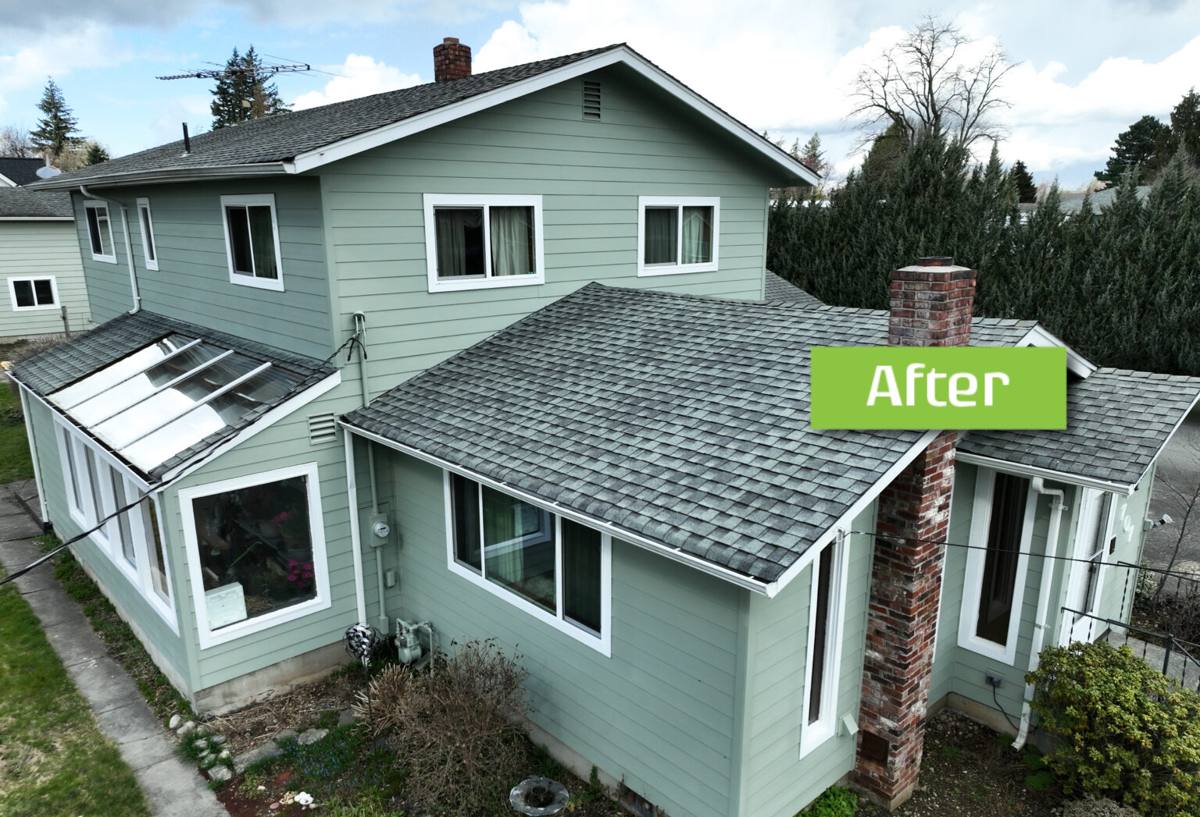
What the Mountain Lake Microclimate Does to a Roof
Shade and Moisture Retention
The forest canopy around Mountain Lake keeps roof surfaces cooler and damper for longer stretches than roofs out in the open. That extended dampness is exactly what moss, moss spores, and lichen need to get established. Once moss roots into a shingle or shake surface, it holds water against the material and accelerates wear — that's a maintenance issue, not necessarily a failure of the roofing product itself, but it's one we design around from day one.
Salt Air and Corrosion
Even set back from the water, Orcas Island homes sit within a salt-influenced marine air pattern. Over years, that air will corrode unprotected or poorly rated fasteners, flashing, and metal roofing components. We spec fastener and flashing materials rated for coastal exposure on every Mountain Lake project, not just the ones closest to shoreline.
Driving Rain and Wind-Driven Water
San Juan County storms often bring rain sideways, not straight down. That means underlayment quality, ice-and-water shield placement at eaves and valleys, and proper flashing detail around penetrations matter more here than in a calmer climate. A roof that only manages water falling straight down will leak at the first real wind-driven storm.
Needle and Debris Load
Conifer needles and cones collect in valleys and around chimneys and vent stacks faster near Mountain Lake than on open lots. Left alone, that debris dams water, holds moisture against roofing material, and clogs gutters, which backs water up under the roof edge.
What a Correctly Installed Roof Needs to Do Here
- Shed wind-driven rain at every valley, ridge, and penetration, not just on flat runs
- Resist moss and algae growth in shaded, slow-drying areas
- Use fasteners and flashing rated for coastal, salt-influenced air
- Allow proper attic and roof-deck ventilation so trapped moisture doesn't rot the deck from underneath
- Handle debris shedding in valleys and around roof penetrations without ponding
- Tie into gutters and drainage that can actually keep up with heavy seasonal rain
Roofing Materials We Install and How They Perform Around Mountain Lake
There isn't one "correct" roofing material for every home here — the right choice depends on the home's design, roof pitch, sun exposure, and budget. Here's how the common options actually perform in this specific microclimate.
| Material | Moss/Algae Resistance | Salt Air Durability | Typical Lifespan Here | Notes |
|---|---|---|---|---|
| Architectural asphalt shingle | Good with algae-resistant granules | Good with coastal-rated fasteners | 25-30 years | Best value; needs periodic moss removal in shaded areas |
| Standing seam metal | Excellent | Very good with proper coating and fasteners | 40-50+ years | Sheds needles and moisture well; higher upfront cost |
| Cedar shake | Requires diligent upkeep | Fair, depends on treatment | 20-30 years with maintenance | Traditional look; highest maintenance burden in shaded, damp settings |
| Synthetic composite shingle | Very good | Very good | 30-50 years | Lightweight, consistent performance, fewer moisture concerns |
For heavily shaded lots directly around Mountain Lake, we lean toward materials with proven algae and moss resistance — either algae-resistant asphalt shingle lines or standing seam metal — because they hold up with less annual upkeep than cedar shake in a slow-drying environment. That's our professional recommendation based on how these materials behave under sustained shade and moisture, not a knock on any manufacturer.
Our Roof Installation Process for Mountain Lake Homes
1. On-Site Assessment
We walk the roof and attic, not just the exterior. We check deck condition, ventilation, existing moss or moisture damage, and how the roof's design handles this property's specific sun and shade pattern.
2. Tear-Off and Deck Inspection
Once the old roofing is off, we inspect the deck for soft spots, rot, or water staining — common where moss or debris has been sitting against the surface for years. Damaged decking gets replaced before anything new goes down; installing new roofing over a compromised deck just hides the problem.
3. Underlayment and Water Protection
Given the driving rain this area sees, we install ice-and-water shield at eaves, valleys, and around all penetrations, with synthetic underlayment across the field. This is the layer that protects the home if wind ever drives water past the roofing surface itself.
4. Flashing and Ventilation Detail
Chimneys, skylights, vent stacks, and roof-to-wall transitions are where most roof leaks actually start. We detail these with coastal-rated flashing and confirm ridge and soffit ventilation is balanced so the attic can dry out properly year-round.
5. Roofing Installation
Material goes down to manufacturer specification with corrosion-resistant fasteners throughout — not just at the perimeter.
6. Final Walkthrough
We walk the finished roof, gutters, and drainage with the homeowner, explain what routine moss/debris maintenance will look like for that specific roof, and answer questions before we consider the job done.
Why It Matters That We Already Work Mountain Lake
A crew that only sees a property once during a bid doesn't know how that roof behaves across a full Orcas Island winter. We've worked enough homes in and around the Mountain Lake area to know which orientations hold moss longest, which valleys collect the most needle debris, and where wind-driven rain tends to find weak flashing. That local knowledge shapes decisions during installation — where we add extra underlayment protection, how we detail a valley, which material makes sense for a specific tree-shaded lot — in ways a generic installation checklist won't catch.
It also matters for scheduling and logistics. Getting materials and crews to island properties efficiently, working around weather windows that are shorter and less predictable than mainland conditions, and understanding permitting through San Juan County all go smoother with a contractor who already does this work here regularly.
Signs Your Mountain Lake Roof May Need Replacement, Not Repair
- Moss or algae covering large sections rather than isolated patches
- Curling, cracking, or missing shingles across multiple areas of the roof
- Soft spots or sagging when walked on, indicating deck damage underneath
- Daylight visible through the roof deck from inside the attic
- Repeated leaks in the same area despite prior patch repairs
- Roof age at or beyond the expected lifespan for its material
If only one or two of these apply, targeted repair may still make sense. If several apply at once, patching usually costs more over time than a properly planned replacement.
What Affects the Cost of a New Roof Here
| Factor | Why It Matters |
|---|---|
| Roof size and pitch | Steeper, larger roofs require more material, safety setup, and labor time |
| Material choice | Asphalt, metal, and composite options carry different material and installation costs |
| Deck condition | Rot or moisture damage found during tear-off adds repair scope |
| Access and site conditions | Tree cover, driveway access, and staging space around Mountain Lake properties affect labor logistics |
| Ventilation and flashing upgrades | Bringing older ventilation or flashing up to current standards adds value and prevents callbacks |
We don't quote a roof off a satellite photo. Every estimate is based on an actual walk of the roof and attic, so the number you get reflects your home's real condition, not a rough average.
Get a Straight Answer on Your Roof
If you're dealing with heavy moss, aging shingles, or a roof you're just not confident in anymore, we're happy to take a look and give you an honest read on repair versus replacement. Reach out for a free, no-pressure estimate using the form below, and we'll walk your Mountain Lake property and tell you what we'd actually recommend.