 Orcas Island
 Siding Installation Built for Eastsound's Marine Climate
Eastsound sits at the head of Fishing Bay, and that location shapes everything about how a home's exterior ages here. Homes in and around the village take on salt-laden air off the water, long stretches of driving rain through the fall and winter, and a moss and lichen season that can run nine months out of the year in shaded, north-facing spots. Siding that works fine in a drier inland climate often struggles here — it stains, swells, or delaminates years before it should. A proper siding installation in Eastsound has to account for all of that from the first course, not patch around it later.
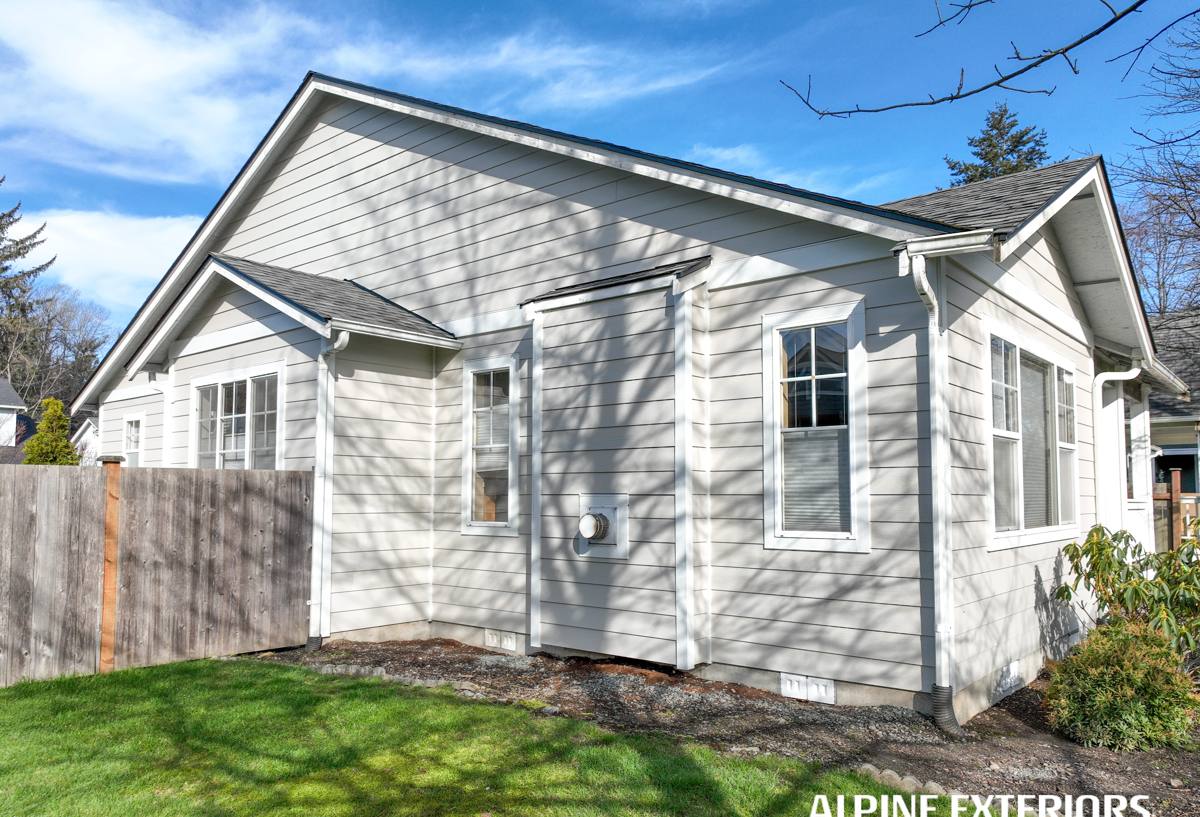
We install James Hardie fiber cement siding exclusively, and we work Eastsound and the rest of Orcas Island regularly enough to know which walls take the worst weather, where moss builds up fastest, and how San Juan County's building requirements apply to a re-side or new install. This page walks through what a correct siding installation actually involves here, and why the details matter more on this island than they might elsewhere.
What Eastsound's Climate Does to Siding Over Time
Three conditions do most of the damage to exterior siding in this area, and each one calls for a different response during installation.
Salt Air
Even a mile or two inland from Fishing Bay, airborne salt settles on exterior surfaces and accelerates corrosion of exposed metal fasteners, flashing, and trim. Siding materials that rely on paint film alone for protection tend to chalk and fade faster in this environment, and any fastener that isn't corrosion-resistant becomes a weak point within a few years.
Driving Rain
Wind-driven rain off the water doesn't just fall on a wall — it gets pushed sideways into laps, seams, and penetrations. Siding systems that depend on tight caulk joints rather than proper water-shedding design are the first to leak. This is where lap orientation, flashing details, and drainage behind the siding matter as much as the siding material itself.
Moss and Lichen Season
Shaded north and east elevations on wooded Orcas Island lots stay damp for months at a time, which is exactly what moss and lichen need to take hold. Once organic growth establishes itself on a wall, it holds moisture against the surface and can start breaking down materials that aren't dimensionally stable or resistant to moisture absorption.
Why James Hardie Is the Right Material for This Job
We standardized on James Hardie fiber cement for every siding installation we do, including here in Eastsound, for reasons specific to this climate. Fiber cement doesn't absorb moisture the way wood-based products can, so it doesn't swell, rot, or delaminate when it stays wet for extended periods — a real concern given how long surfaces stay damp under Orcas Island's tree cover. It's also non-combustible, which matters on an island where wildfire risk during dry summer stretches is a genuine consideration for insurance and building officials alike.
Hardie's ColorPlus factory-applied finish is baked on under controlled conditions and holds color and film integrity longer than field-applied paint, which reduces how often a homeowner needs to repaint in a climate that's hard on painted surfaces. The HZ5 product line is engineered specifically for climates with significant moisture exposure, which fits Eastsound's rainfall and humidity profile better than a general-purpose formulation. We do not install vinyl, LP SmartSide, primed wood, or other fiber cement brands — that's a deliberate standard, not a sales pitch, and we're happy to walk through the reasoning on a walkthrough.
What a Correct Installation Actually Involves
The siding material is only part of the equation. Most siding failures we get called to look at on Orcas Island trace back to installation shortcuts, not the product itself. A correct installation in Eastsound's conditions includes:
- Weather-resistive barrier: A continuous, properly lapped water-resistive barrier behind the siding, installed shingle-style so water sheds downward and outward rather than working its way in at seams.
- Rainscreen or drainage gap: A furring or drainage mat detail that lets any moisture that gets behind the siding drain and dry out, rather than sitting against the sheathing — especially valuable on shaded, slow-drying elevations.
- Corrosion-resistant fasteners: Stainless steel or hot-dip galvanized fasteners rated for coastal exposure, not standard fasteners that will rust and stain the face of the siding within a few seasons.
- Correct nailing and clearances: Hardie's published fastening schedule, minimum ground clearance, and gaps at trim and penetrations followed exactly — not "close enough."
- Flashing at every penetration: Windows, doors, hose bibs, light fixtures, and vents each get proper step or head flashing, not just a bead of caulk.
- Factory-cut edges kept intact where possible: Field cuts sealed and painted to match, since a raw cut edge is where moisture intrusion starts on any fiber cement product.
Skipping any one of these doesn't necessarily show up on installation day. It shows up two, five, or ten years later as a stain, a soft spot, or a leak that's expensive to trace back to its source.
Our Installation Process for Eastsound Homes
1. On-Site Assessment
We walk the exterior, note which elevations take the worst weather and moss exposure, check the condition of existing sheathing and trim, and identify any moisture damage that needs to be addressed before new siding goes on. Covering up a rot problem with new siding just hides it — we won't do that.
2. Scope and Product Selection
We go over which Hardie plank profile, exposure, and color fit the home, and explain the reasoning so the decision is informed, not just aesthetic. For homes with heavy shade or moss history, we'll flag which elevations may benefit from additional drainage detailing.
3. Tear-Off and Substrate Check
Old siding comes off, and we inspect the sheathing underneath for water damage or rot before anything new goes up. Any compromised sheathing gets replaced — installing new siding over damaged substrate just guarantees a repeat problem.
4. Weather Barrier and Drainage Installation
The water-resistive barrier and drainage detailing go in next, with careful attention to laps, seams, and transitions around windows and doors.
5. Siding Installation
Hardie planks or panels go up per manufacturer specification — correct fastener spacing, clearances, and flashing at every penetration.
6. Final Inspection and Cleanup
We walk the completed job, check caulking and paint touch-up at field cuts, and clean up the site before calling it done.
Permitting and Local Requirements
Exterior siding replacement on Orcas Island generally falls under San Juan County's building permitting process, and requirements can vary depending on the scope of work, whether structural sheathing is being replaced, and the home's location relative to shoreline jurisdiction. We handle the permitting conversation as part of the process so homeowners aren't left navigating county requirements on their own. If a property falls within shoreline management areas near Fishing Bay or other Eastsound waterfront, that can add review steps worth planning for early.
Cost Factors for a Siding Installation in Eastsound
Every home is different, but the factors below are what typically move the price on a siding installation in this area. We provide detailed, written estimates after an on-site walkthrough rather than ballpark numbers over the phone, since the condition of the existing sheathing is often the biggest variable.
| Factor | Why It Matters Here |
|---|---|
| Existing sheathing condition | Moisture-damaged sheathing found during tear-off adds repair scope before new siding can go on |
| Home size and wall complexity | More corners, dormers, and penetrations mean more flashing and cutting labor |
| Access and site conditions | Wooded lots, steep grades, and limited staging area (common on Orcas Island) affect labor time |
| Siding profile and color | Plank width, exposure, and ColorPlus color selection affect material cost |
| Drainage detailing | Shaded or moss-prone elevations may warrant added rainscreen detailing |
| Trim and accessory work | Fascia, soffit, and trim replacement done alongside siding adds scope but avoids a mismatched look later |
Signs Your Eastsound Home May Need New Siding Soon
- Persistent moss or lichen growth that returns quickly after cleaning
- Soft or spongy spots when pressed, especially near the bottom courses or around windows
- Visible staining or streaking that tracks with rain patterns on north or east walls
- Paint that's failing faster than the rest of the house, or bubbling and peeling
- Warping, cupping, or visible gaps at seams and corners
- Rusting fastener heads bleeding through the paint
Any one of these on its own might just need attention. Several together, especially on the weather-exposed side of a home, usually means the underlying material is failing and a full re-side is the more cost-effective long-term fix.
Why Hire a Crew That Already Works Eastsound
Siding installation isn't just about following a manufacturer's spec sheet — it's about applying that spec correctly to the specific conditions a home faces. A crew that regularly works Eastsound and the rest of Orcas Island already knows which elevations take the worst driving rain, how fast moss reestablishes on shaded walls, and what San Juan County expects during permitting. That local familiarity translates directly into fewer surprises during the job and a longer-lasting result once it's done. It also means we're a known, reachable local business if a question comes up years down the road — not a crew that came over on the ferry once and moved on.
If you're weighing a siding replacement or new installation in Eastsound, we're glad to walk your property, look at what your home is dealing with, and put together a straightforward estimate — no pressure, no hard sell. Reach out using the form below to get started.