 Orcas Island
 Why West Sound's Climate Is Hard on Siding
Homes on the west side of Orcas Island sit right in the path of marine weather moving through the San Juan Islands — salt-laden air off the water, long stretches of driving rain in the fall and winter, and a moss and algae season that can run most of the year on shaded, north-facing walls. That combination is tougher on exterior cladding than most inland Washington climates. Salt air accelerates corrosion of fasteners and trim metal. Wind-driven rain finds every gap in flashing and caulking. And the near-constant damp shade under Douglas fir and madrone canopy keeps moss and algae growing on siding surfaces that never fully dry out between storms.
Wood siding and some engineered wood products struggle here because they depend on paint film and caulking staying intact to keep moisture out of the substrate. Once that film cracks or the caulk lets go — which happens faster in salt air and constant damp — water gets into the material itself, and rot follows. Vinyl holds up to moisture fine but softens and fades under UV and can crack in a hard freeze, and it doesn't stop moss from colonizing its surface texture. James Hardie fiber cement gives us a cladding that doesn't absorb water into a wood substrate, doesn't rely on a field-applied paint job to stay protected, and holds a factory finish that's built to take UV, salt, and repeated wetting without failing early.
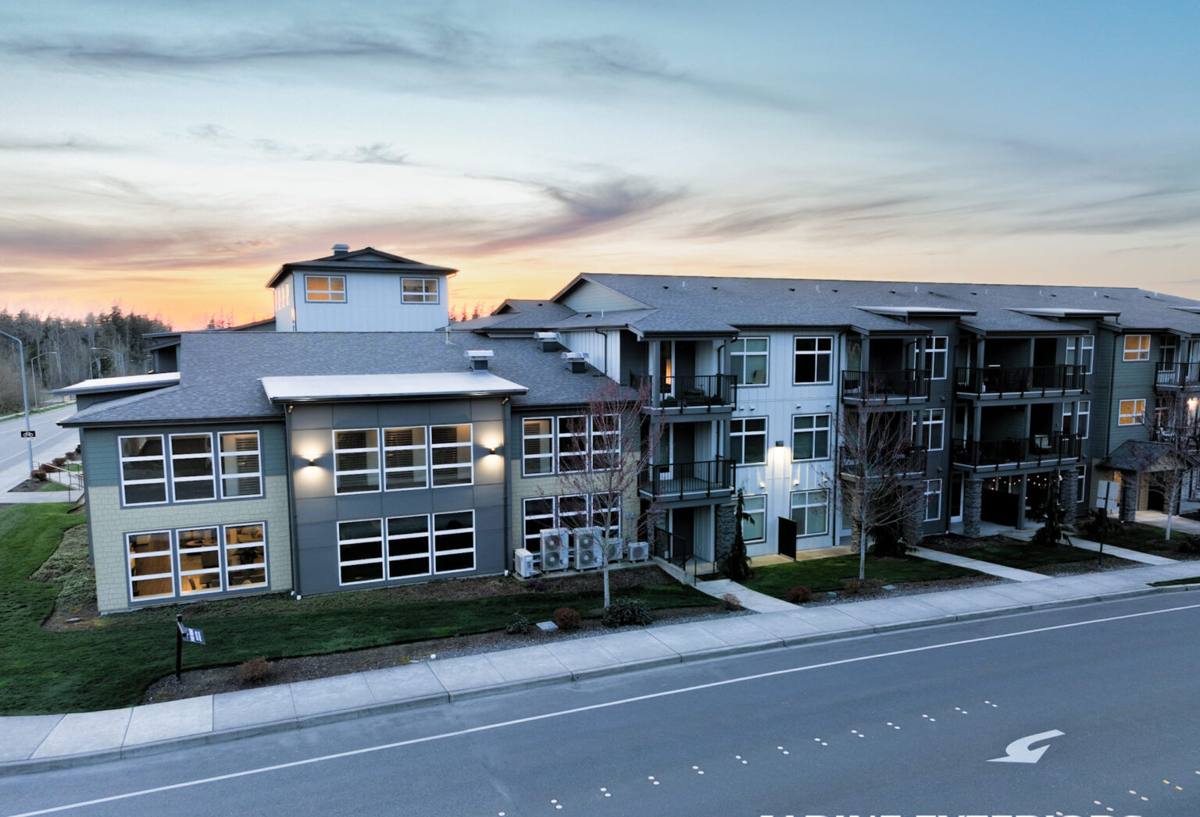
Why We Install Only James Hardie on West Sound Homes
We standardized on James Hardie fiber cement across every job we do, including here in West Sound, and we don't install LP SmartSide, vinyl, Cemplank, Allura, primed spruce, or cedar. That's not a marketing line — it's a decision based on what actually holds up in this specific climate over 20-plus years, not just the first five. Fiber cement is non-combustible, doesn't feed insects or rot the way wood-based products can once moisture gets behind them, and Hardie's ColorPlus factory finish is baked on with a process built to resist fading and chipping better than field-applied paint. In a climate where wind-driven rain and salt air punish any weak point in a finish, that factory-applied durability matters more than it would somewhere drier.
We're honest that other products have things going for them — LP SmartSide is lighter and easier to handle, cedar looks beautiful and some owners love that it's a natural material, vinyl is inexpensive up front. But every one of those trade-offs shows up as a maintenance bill or an early replacement in a climate like this one. We'd rather tell a homeowner that up front than sell a product we don't think will perform on their house.
Which Hardie Product Fits a West Sound House
James Hardie makes climate-engineered product lines, and the HZ5 formulation is the one specified for the Pacific Northwest's wet, marine-influenced weather — it's engineered around moisture exposure rather than freeze-thaw cycling, which fits San Juan County's climate better than a formulation built for a dry, hard-freeze region. Within that line, the choice usually comes down to how the house is meant to look and how exposed each elevation is to weather.
Common choices we install here
- HardiePlank lap siding — the most common choice for traditional West Sound homes, available in several exposure widths and textures (smooth or cedar-textured).
- HardiePanel vertical siding — often used for board-and-batten looks or accent sections, popular on more contemporary island homes.
- HardieTrim — matched trim boards that don't rot the way dimensional lumber trim does at corners, window returns, and fascia, which are the spots that take the worst of the wind-driven rain.
- HardieSoffit — vented or non-vented panel for soffit areas, useful where moss and moisture buildup are a problem under eaves.
ColorPlus finishes come in a range of factory colors, and we generally steer West Sound clients toward finishes and sheens that show moss and salt spray staining less between washings, since heavy shade on some lots means algae growth is a matter of when, not if.
What a Correct Installation Actually Involves
Fiber cement siding is only as good as the installation behind it, and this is where a lot of the real-world performance difference between a good job and a bad one shows up — especially in a climate that tests every seam. Manufacturer specs exist for a reason, and skipping them is exactly how a house ends up with a call-back five years in.
The details that matter most in a marine climate
- Correct water-resistive barrier and drainage plane behind the siding, so any moisture that does get past the cladding has somewhere to go instead of sitting against the sheathing.
- Proper flashing at every window, door, and horizontal trim intersection — the majority of siding failures we see in wet coastal climates trace back to flashing details, not the siding material itself.
- Correct fastener type and spacing — stainless or coated fasteners rated for the exposure, driven per Hardie's blind-nailing or face-nailing specs rather than whatever's fastest.
- Proper gaps and sealant at butt joints and penetrations, using sealants rated for the climate and the specific joint, not a bead of whatever's on the truck.
- Minimum clearance from grade, decks, and roof lines so the bottom edge of the siding isn't sitting in standing moisture or snow.
- Field-cut edges primed or sealed per spec, since a raw cut edge is the one place the factory finish isn't protecting the board.
None of this is exotic — it's just following the manufacturer's installation manual closely, on every elevation, including the ones nobody sees from the road. That last part is where corners tend to get cut, and it's exactly the wrong place to cut them on a west-facing wall catching the weather.
Siding Options Compared for This Climate
| Material | Salt Air / Moisture Behavior | Moss & Algae Resistance | Maintenance Here | Realistic Lifespan |
|---|---|---|---|---|
| James Hardie fiber cement | Doesn't swell, rot, or absorb water into the board itself | Factory finish resists staining better than raw wood; still needs periodic washing | Occasional wash; repaint only if ever needed, decades out | 30+ years with correct install |
| Cedar siding | Absorbs moisture; depends on finish staying intact | Prone to moss and algae in shaded, damp spots | Refinish/reseal every few years | 15-25 years before major refinishing |
| Vinyl siding | Doesn't rot but can warp/crack in temperature swings | Textured surface can hold moss and grime | Periodic washing; panels can't be spot-repainted | 20-30 years, fades over time |
| LP SmartSide (engineered wood) | Wood-strand core; vulnerable if moisture gets past the finish | Similar staining risk to painted wood | Caulk and paint upkeep to protect the substrate | Variable; heavily dependent on maintenance and installation |
Our Process for West Sound Jobs
Every project starts with a walk-around of the house and a look at how each elevation is actually exposed — which walls take the worst of the weather off the water, where moss and shade are already a problem, where the existing siding or trim is showing early failure. That assessment drives the product and trim choices as much as the homeowner's aesthetic preference does.
What happens once a project is scheduled
- Remove existing siding down to the sheathing and inspect for hidden moisture damage or rot, since West Sound's damp shade means problems can be further along than they look from outside.
- Repair or replace any damaged sheathing and framing before anything new goes back on — new siding over a bad substrate just hides the problem.
- Install a correct water-resistive barrier and flashing package at every penetration, window, and horizontal transition.
- Install HardiePlank, HardiePanel, and matching HardieTrim per Hardie's fastening and clearance specifications for the HZ5 climate zone.
- Seal and caulk per spec at joints and penetrations, using products suited to a marine climate rather than a generic caulk.
- Final walk-through with the homeowner to review the finished work and go over basic care.
Why a Crew That Already Works West Sound Matters
A siding contractor who works across San Juan County regularly sees how the same product performs differently depending on which side of a hill or how close to the water a given house sits. That matters for practical decisions — which elevations need extra attention to flashing, where moss growth is going to be a maintenance issue regardless of material, how a job needs to be scheduled around the wet season so the substrate isn't exposed to open weather any longer than necessary. It also means logistics are already worked out: getting crews and materials to island properties, understanding ferry schedules and weather windows that can affect a project timeline, and knowing which suppliers can get Hardie product and matching trim to the island without delay.
A crew that's done this work up and down the west side of the island isn't guessing at what a coastal Orcas Island home needs — they've already seen what happens to the last three products the homeowner tried before switching to fiber cement.
Keeping Hardie Siding Looking Right in a Moss-Prone Climate
Correctly installed James Hardie siding is low-maintenance, not zero-maintenance. In a climate with this much shade and moisture, a little regular attention keeps it looking like day one for decades.
- Rinse siding annually with a garden hose and soft brush, focusing on shaded, north-facing walls where moss and algae take hold first.
- Avoid pressure washing directly into joints and seams — it can force water past caulking that's otherwise doing its job.
- Keep gutters clear and downspouts directed away from the wall so runoff isn't constantly wetting one section of siding.
- Trim back vegetation and tree canopy that keeps a wall in permanent shade, since that's the single biggest driver of moss growth.
- Inspect caulking at trim joints and penetrations every year or two and have any cracked or missing sealant redone before it lets water in.
- Watch for any staining or streaking that doesn't rinse off, which can be an early sign of a flashing or drainage issue rather than just surface grime.
If you're planning a siding project on Orcas Island's west side, we're glad to come take a look at your house, walk you through what James Hardie product and details make sense for your specific exposure, and put together a free, no-pressure estimate.