 Orcas Island
 Why Roofs in Eastsound Wear Differently Than the Mainland
A roof in Eastsound doesn't fail the same way a roof in Spokane or even Bellingham does. The combination of salt-laden air off the water, long stretches of driving rain, and heavy tree cover creates a slower, quieter kind of damage — moss taking hold in shaded valleys, fasteners corroding faster than their rated life, and moisture working into seams that would stay dry on a drier, more exposed site. San Juan County's marine climate means roofs here are almost never truly dry for long. That constant low-grade moisture is what shortens the life of a roofing system faster than storms do.
None of this means Orcas Island roofs need to be exotic or over-built. It means the details — underlayment choice, flashing, ventilation, and moss management — matter more here than they would somewhere drier. A roof replacement done to a generic standard, without accounting for that, tends to show problems again within five to seven years instead of lasting out its full service life.
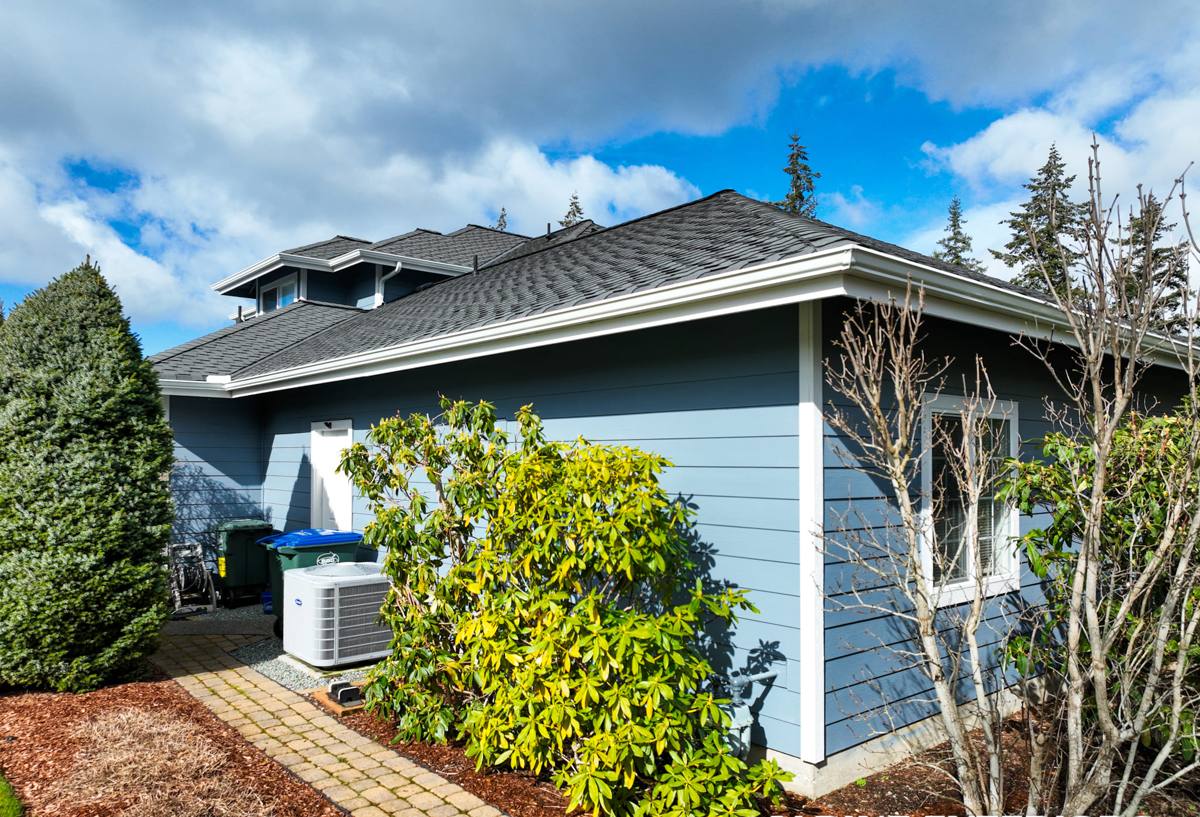
Signs an Eastsound Home Is Due for a Full Replacement
Not every roof problem calls for a full tear-off. But there's a point where patching stops making financial sense and a full replacement is the honest recommendation. Common signs we see on Eastsound homes include:
- Moss established across the north- or shade-facing slopes, not just surface growth but visible lifting of the shingle mat underneath
- Granule loss heavy enough that you can see bare asphalt from the ground
- Soft spots or sponginess when walking the roof, usually meaning the deck itself has taken on water
- Daylight visible through the attic sheathing, or musty smell and staining in the attic space
- Shingles curling, cupping, or cracking at the edges — common once a roof passes 18-20 years in this climate
- Repeated leaks at the same valley, chimney, or skylight after multiple repair attempts
If you're only seeing one or two of these, a repair or a targeted section replacement may still make sense. A full replacement earns its cost when the underlying deck, underlayment, and flashing system are all reaching the end of their useful life at the same time.
What a Correct Roof Replacement Actually Involves
Tear-Off and Deck Inspection
We don't install new roofing over old material or a deck we haven't inspected. A full tear-off lets us see the sheathing directly, which is the only way to catch rot, delamination, or soft spots before they're buried under a new roof for another 20-plus years. On an island with this much moisture exposure, skipping that inspection is how a roof replacement ends up needing deck repairs mid-project — or worse, hiding a problem that resurfaces in a few years.
Underlayment and Water Protection
In a climate with sustained driving rain, the underlayment is doing more work than people assume. We use synthetic or self-adhered underlayment in vulnerable areas — valleys, eaves, and low-slope transitions — rather than relying on shingles alone to shed water. Ice and water shield along eaves and valleys is standard practice here, not an upsell, because wind-driven rain off the water can push moisture uphill under standard felt.
Flashing at Every Penetration
Chimneys, skylights, vent stacks, and roof-to-wall transitions are where the large majority of leaks originate — not the field of the roof itself. Correct flashing means new step flashing, counter-flashing, and properly lapped courses at every penetration, not caulk patched over old metal. This is one of the areas where corner-cutting shows up years later as a hidden leak rather than an obvious failure.
Ventilation
A roof that traps moisture in the attic will fail from the inside regardless of how good the shingles are. Balanced intake and exhaust ventilation keeps the deck dry from underneath, which matters as much in a humid marine climate as keeping rain out from above. We check existing ventilation as part of every replacement and correct it when it's inadequate.
Material Options for San Juan County Homes
There's no single "best" roofing material for Orcas Island — the right choice depends on the home's style, budget, and how much long-term maintenance the owner wants to take on. Here's an honest comparison of the materials we most often discuss with Eastsound homeowners:
| Material | Typical Lifespan Here | Moss / Moisture Behavior | Considerations |
|---|---|---|---|
| Architectural asphalt shingle | 20-30 years | Good with proper underlayment; needs periodic moss treatment | Best value; wide color/style range; easiest to repair in sections |
| Standing seam metal | 40-50+ years | Excellent — moss struggles to establish on smooth metal | Higher upfront cost; quieter than reputation suggests with proper underlayment; good for steep, shaded roofs |
| Cedar shake | 20-30 years with upkeep | Requires the most active maintenance in a wet, shaded climate | Traditional island look; needs regular treatment and inspection to avoid moisture retention issues |
| Synthetic/composite shingle | 25-40 years | Very good; resists organic growth better than wood | Mimics shake or slate appearance with less upkeep; product and warranty structure varies by manufacturer |
For homes tucked under heavy tree canopy — common throughout Eastsound and the surrounding areas — we lean toward materials that resist moss and organic buildup, since shade is the single biggest driver of premature roof aging here. For more open, exposed sites, wind and driving rain resistance matter more than moss resistance.
How Our Roof Replacement Process Works
- On-site assessment — we walk the roof and attic, check the deck condition where accessible, and note ventilation, flashing, and moss patterns specific to your property.
- Written estimate — a clear scope covering tear-off, deck repair allowance, underlayment, material, flashing, and ventilation work, so there are no surprise line items mid-project.
- Scheduling around island weather — we plan tear-off days around dry weather windows, since an open deck exposed to a sudden squall is a real risk on Orcas Island and we build the schedule to avoid it.
- Tear-off and deck inspection — old roofing removed, deck inspected and repaired as needed before anything new goes down.
- Underlayment, flashing, and material installation — done in the sequence and to the spec discussed in the estimate, not shortcuts to save a day.
- Cleanup and haul-off — full site cleanup, including magnetic sweep for stray nails, and proper disposal of old material.
- Final walkthrough — we review the finished roof with you before calling the job done.
Why Local Experience on Orcas Island Matters
Roofing an island home isn't logistically the same as roofing on the mainland. Material deliveries and dumpster drop-off/pickup depend on ferry schedules, which means a crew that doesn't plan for that can end up with a torn-off roof sitting exposed while it waits on a supply run. We schedule tear-off, delivery, and disposal around the ferry system as a matter of course, not as an afterthought discovered mid-project.
There's also the matter of knowing which parts of a given property catch the worst of the wind and rain off the water versus which are more sheltered by trees — that local read affects where we prioritize flashing and underlayment detail. A crew that only occasionally works San Juan County doesn't have that context built in, and it tends to show in how the details near flashing and valleys are handled.
Maintaining a New Roof in a Marine Climate
A correctly installed roof still benefits from basic upkeep in this climate. We recommend homeowners:
- Have moss growth treated or removed at the first sign of it, rather than waiting until it's established
- Keep gutters clear of needles and debris, since clogged gutters back water up under the roof edge
- Trim back branches that keep a roof section shaded and damp longer than the rest of the roof
- Schedule a visual inspection every couple of years, especially after major windstorms
- Address small flashing issues or granule loss early rather than letting them become a full leak
None of this is intensive work, but skipping it is how a well-installed roof still ends up needing early attention in a climate this consistently wet.
What Affects the Cost of a Roof Replacement
Every roof is priced based on its own conditions, but the main cost drivers we see on Eastsound homes are consistent: roof size and pitch, the number and complexity of penetrations (chimneys, skylights, valleys), the condition of the existing deck, material choice, and access — some Orcas Island properties have driveways or tree cover that make staging and material delivery more time-consuming than a straightforward mainland lot. Steeper roofs and heavily shaded roofs also tend to need more underlayment and moss-resistant detailing, which affects the estimate. We'd rather walk your specific roof and give you real numbers than quote a broad range that doesn't reflect your property.
Get a Straightforward Estimate
If your Eastsound roof is showing moss, wear, or age, we're happy to take a look and give you an honest read on whether it needs a repair or a full replacement — no pressure either way. Fill out the form below and we'll set up a time to come out and assess your roof in person.