 Orcas Island
 Doe Bay's Climate Is Hard on Siding — Here's Why
Doe Bay sits on the exposed east side of Orcas Island, close enough to the water that salt-laden air is a daily fact of life, not an occasional nuisance. Add San Juan County's long wet season, wind-driven rain off the water, and the deep shade thrown by the fir and cedar canopy that surrounds most Doe Bay properties, and you get a set of conditions that will find every weakness in a home's exterior. Siding here doesn't just get wet — it gets wet, then stays wet, because tree cover slows drying and salt air keeps humidity elevated even on nominally dry days.
That combination is why siding failures we see in Doe Bay tend to look different from what you'd find on a sunnier, more open lot elsewhere on the island. Moss and algae growth start earlier and spread faster. Paint and caulk break down sooner. And any gap in the water management behind the siding — a missed flashing detail, a caulked joint that should have been left open, a house wrap seam that wasn't lapped correctly — turns into rot faster than it would in a drier climate.
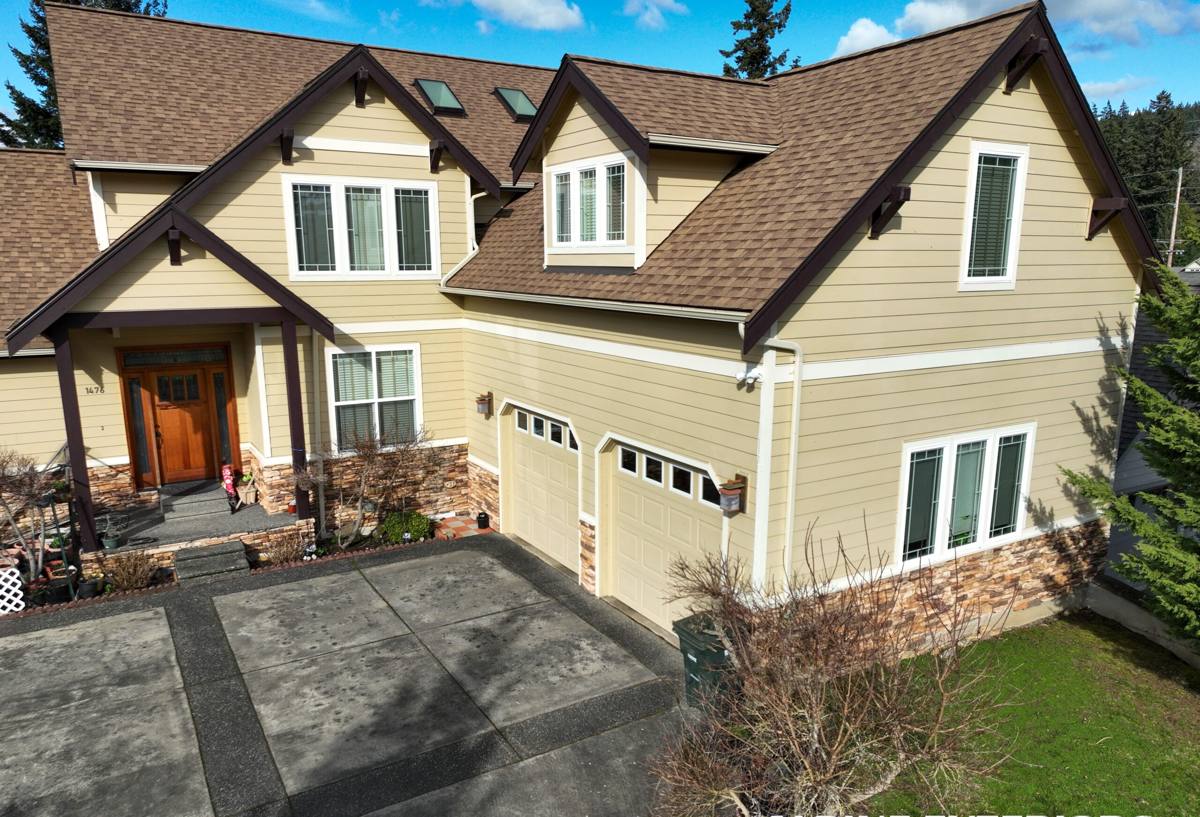
Signs a Doe Bay Home Needs Siding Replacement, Not Just a Patch
Homeowners often call us thinking they need a repair or a repaint, and in some cases that's true. But there are specific signs that tell us the siding system itself has failed and a patch will only buy a season or two before the same problem resurfaces.
- Soft or spongy spots when you press on the siding, especially near the bottom courses and around window and door trim
- Persistent moss or algae staining that returns within weeks of cleaning, even on siding that's been power-washed
- Paint that's peeling or bubbling rather than just fading — a sign moisture is pushing out from behind the material
- Visible warping, cupping, or separation at panel seams, common with wood-based and engineered wood sidings exposed to this much moisture cycling
- A musty smell or visible mold on interior walls that back up to exterior siding
- Siding that's original to a home built more than 20-25 years ago, particularly if it's cedar, primed spruce, or an older wood composite
If you're seeing two or more of these, it's worth having the siding inspected before deciding between repair and full replacement — because on a coastal, tree-shaded lot like most in Doe Bay, surface damage is often a symptom of a moisture problem that's already working on the sheathing underneath.
What a Correct Siding Replacement Actually Involves
It Starts Underneath the Siding, Not With the Siding
The siding itself is the least important variable in whether a replacement lasts. What matters more is what's behind it: a continuous weather-resistant barrier, correctly lapped and taped seams, properly integrated flashing at every window, door, and roof intersection, and enough of a rainscreen gap for water that does get behind the cladding to drain and the wall to dry. Skip any of that and even the best siding material will trap moisture against the sheathing.
Then the Material Choice
Once the water management layer is right, material choice determines how the home performs over the following 20-30 years — how it holds paint, how it handles the salt air, and how much upkeep it demands. This is the step where we've drawn a hard line, explained below.
Then the Details That Are Easy to Skip
Correct fastener spacing and type (stainless or hot-dip galvanized near the water, not standard coated fasteners), factory-caulked or backer-rod joints instead of just caulk smeared over a gap, proper clearance at grade and roof lines so siding isn't wicking up moisture from below, and factory-finished panels wherever possible so field-cut edges are the only place raw material is exposed.
Why We Install Only James Hardie Fiber Cement
We made a decision early on to install one siding system — James Hardie fiber cement — and to turn down jobs where a homeowner wants something else. That's not a marketing position, it's a maintenance-and-moisture position, and in a climate like Doe Bay's it matters more than in most places.
Fiber cement doesn't rot. It isn't food for the moss and algae that thrive in this much shade and humidity the way wood fiber is. It doesn't warp or cup the way engineered wood or solid wood siding can when it takes on repeated wetting and drying cycles. Hardie's ColorPlus finish is baked on at the factory under conditions no field-applied paint job can match, which means it holds color and resists the chalking and peeling that salt air accelerates on site-painted siding. And Hardie backs the product with a long transferable warranty that assumes the siding is going to be on a coastal property — because for a huge share of their installs, it is.
We won't install LP SmartSide, vinyl, Cemplank, Allura, primed spruce, or cedar, and we're upfront about why. Engineered wood products like LP SmartSide use a wood strand core — treated, but still wood — and in a wet, shaded, salt-air environment like Doe Bay, any breach in that treated surface (a scratch, an uncaulked seam, a fastener hole) gives moisture a path into a substrate that's still organic material. Vinyl expands and contracts more than fiber cement, doesn't hold up as well to direct wind-driven rain intrusion at seams, and can't be painted a dark, custom color without risking warping in direct sun. Cedar and primed spruce are beautiful but need real, recurring maintenance — refinishing on a cycle, not a one-time job — to survive this climate long-term, and they're the most attractive food source for the moss and mildew this area already produces in abundance. Cemplank and Allura are fiber cement too, and not bad products, but we standardized on one manufacturer, one installation system, and one warranty structure so every job we do is backed the same way.
Comparing Siding Options for a Coastal, Shaded Lot
| Material | Moisture/Rot Resistance | Moss & Algae Resistance | Maintenance Cycle | Typical Lifespan |
|---|---|---|---|---|
| James Hardie fiber cement | Excellent — non-organic core | High — not an organic food source | Occasional wash; no refinishing needed for 15+ years | 30-50 years |
| Cedar / primed spruce | Fair — treated but organic | Low — organic surface invites growth | Refinish/reseal every 3-7 years | 15-25 years with upkeep |
| Engineered wood (LP SmartSide) | Good if intact; vulnerable at breaches | Moderate | Repaint every 7-10 years; seal all cuts/holes | 20-30 years |
| Vinyl | Good — won't rot, but seams can leak | Moderate | Low, but limited to lighter factory colors | 20-30 years |
This isn't a knock on every alternative — it's why, for this specific climate, we've chosen to install just one of them.
Our Process for a Doe Bay Siding Replacement
Assessment
We start by inspecting the existing siding and, where we can access it, the sheathing and framing underneath — moisture readings, not just a visual look — so we know whether we're dealing with a cosmetic issue or a water-intrusion problem before we ever write a proposal.
Scope and Materials
We spec the Hardie product line, profile, and factory color that fits the home and its exposure — homes closer to the water or with more direct wind exposure sometimes call for different detailing than a more sheltered, tree-covered lot.
Tear-Off and Water Management Repair
Old siding comes off, the wall gets inspected again with the sheathing exposed, any rot or damaged material gets replaced, and the weather-resistant barrier and flashing go in correctly — this step is where a rushed job fails years later, and it's the step we don't rush.
Installation
Hardie siding goes on to manufacturer spec: correct fastener type and spacing, correct clearances, factory-finished panels field-cut only where unavoidable, and those cut edges sealed.
Final Walkthrough
We walk the finished job with the homeowner, point out anything worth knowing for future maintenance, and make sure everything matches what was scoped.
Logistics That Matter for a Doe Bay Job Specifically
Doe Bay is a working part of Orcas Island, not the ferry landing or the main commercial center of the island — which means material delivery, crew scheduling, and even something as simple as disposal hauls take more planning than a job in a more central location. Narrow, winding roads and limited staging space on some lots mean a crew that hasn't worked this specific area before can lose real time just figuring out logistics on day one. A crew that already knows how to stage material, schedule around ferry timing, and work efficiently on Doe Bay's roads and lot layouts gets more actual installation done per day on site — which matters both for your timeline and for keeping the wall assembly's water management steps from being rushed under pressure to catch a delivery or a boat.
Cost Factors for Doe Bay Siding Replacement
Every home is different, and we'll give you a firm number after an on-site look — but the main variables that move the price are consistent from job to job:
- Square footage of siding and the home's overall complexity (corners, gables, dormers)
- Condition of the sheathing and framing underneath — hidden rot repair adds cost that's impossible to quote sight unseen
- Hardie product line chosen (lap siding, panel, or shingle profiles vary in material cost)
- Trim, fascia, and soffit work bundled into the same project
- Site access and staging — a tight, tree-covered, or hard-to-reach lot takes longer than an open one
- Tear-off and disposal of the existing material
We'd rather walk a property and give you real numbers than throw out a broad range that doesn't mean much for your specific home.
Protecting Your Investment After Installation
Fiber cement lowers the maintenance burden dramatically compared to wood or engineered wood, but "low maintenance" isn't "no maintenance" — especially here. A yearly rinse to knock back moss and algae before it takes hold, keeping gutters clear so water isn't sheeting down the wall, and trimming back vegetation that's holding moisture against the siding will keep a Hardie installation looking and performing the way it's supposed to for decades. None of that is the recurring refinishing cycle that wood and engineered wood siding demand — it's basic upkeep, not restoration work.
If your Doe Bay home's siding is showing its age, or you just want an honest read on whether repair or replacement makes sense, we're glad to come take a look. The estimate is free, there's no pressure, and you'll get a straight answer either way — use the form below to get started.