 Orcas Island
 Why Doe Bay Decks Wear Differently Than Decks Inland
A deck on the east side of Orcas Island lives a harder life than the same deck would in a sheltered inland town. Doe Bay sits close to the water, which means salt-laden air moving through the framing and fasteners almost year-round, driving rain off the water during fall and winter storms, and long stretches of shade and dampness under the tree canopy that keeps moss and algae established for months at a time. San Juan County's marine climate is mild, which is part of why people love it here, but "mild" also means humid and slow to dry out. A deck that would air out in two days somewhere drier might stay damp for a week after a Doe Bay storm.
That combination — salt, moisture, and shade — is hard on every part of a deck: the ledger board where it meets the house, the fasteners holding boards down, the framing underneath, and the decking surface itself. We've repaired decks all over Orcas Island, and the failure patterns we see on Doe Bay properties are consistent enough that we can usually tell what we're going to find before we even pull the first board.
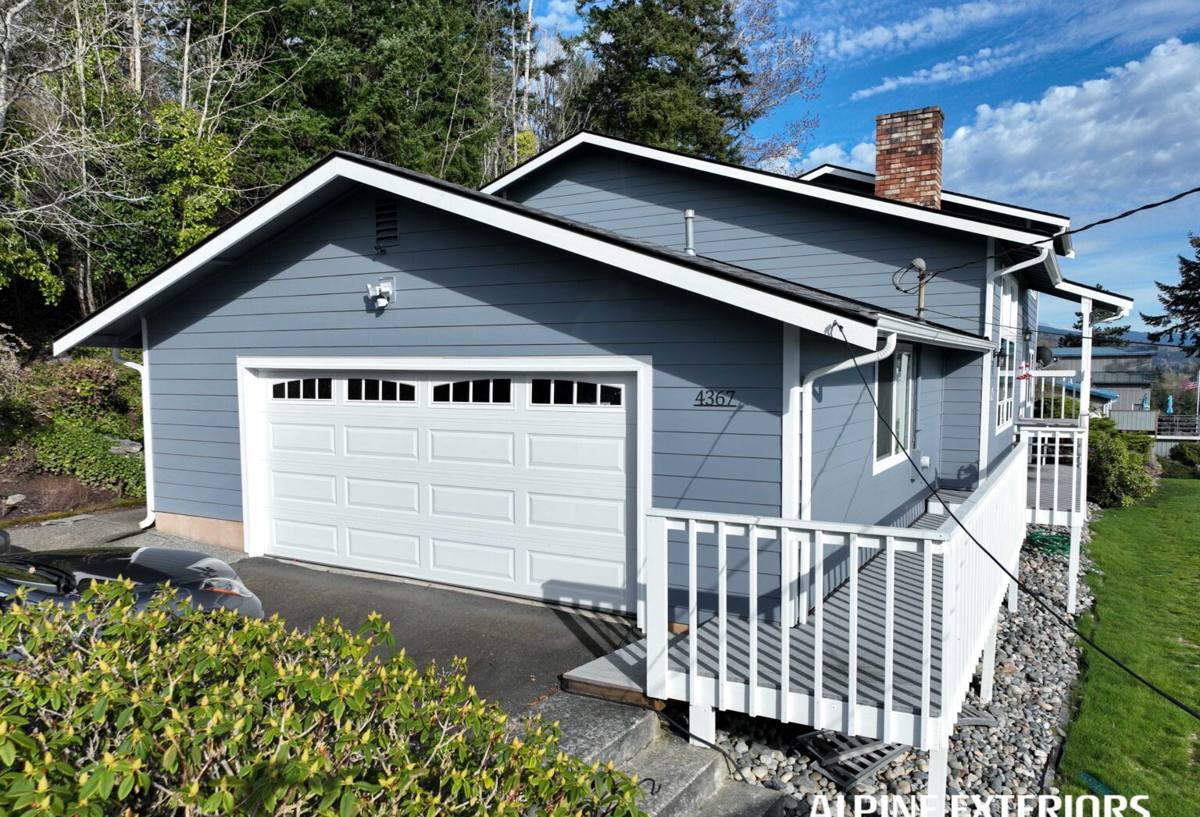
The Early Warning Signs Worth Acting On
Most deck failures don't happen suddenly. They build for a season or two while the deck still looks fine from a few feet away. Catching problems early is almost always the difference between a repair and a full rebuild.
What to check from the surface
- Boards that feel spongy or flex more than neighboring boards when you step on them
- Persistent black or green streaking that doesn't clean off with a deck wash
- Fastener heads that have rusted, bled orange stains into the wood, or backed out
- Gaps opening between boards, or boards cupping at the edges
- A railing that wiggles more than it used to
What to check underneath
If you can get under the deck or crawl along the perimeter, look at the ledger board connection to the house, the tops of the support posts, and any spot where framing sits close to grade or against a hillside. Soft, dark, or crumbling wood in any of those spots means moisture has already gotten in — usually well before it showed up on the surface.
What a Correct Deck Repair Actually Involves
A lot of "deck repair" in this region amounts to replacing a few obviously bad boards and calling it done. That approach almost always misses the actual cause, which is usually moisture getting into the structure, not just the surface. A repair that's going to hold up through another Doe Bay winter needs to address the structure, not just what's visible.
Structure first
We check the ledger board flashing where the deck attaches to the house — this is the single most common source of hidden rot on decks in wet coastal climates, because water running down the siding gets trapped right where the deck meets the wall. We check post bases, beam connections, and joist hangers for rust and movement. Any framing member that's soft, cracked, or undersized for the load gets replaced, not patched.
Fasteners and hardware
In a salt-air environment, the wrong fastener is often the reason a deck fails early. Standard galvanized screws and hangers can corrode within a few years this close to the water. We use stainless steel or heavy hot-dip galvanized fasteners and connectors rated for coastal exposure, and we make sure decking is fastened in a way that lets it move slightly with wood expansion instead of splitting.
Surface repair
Once the structure is sound, we address the decking itself — replacing damaged boards, resetting fasteners, and, where it makes sense, treating or sealing exposed wood so it can shed water instead of absorbing it.
Repair or Replace? What Actually Drives That Decision
Homeowners often assume any deck with problems needs full replacement. In our experience, most Doe Bay decks we're called out for can be properly repaired if the framing is still structurally sound. Replacement makes sense when the damage has spread through the load-bearing structure, not just the decking.
| Factor | Usually points to repair | Usually points to replacement |
|---|---|---|
| Framing condition | Solid, dry, no rot at connections | Soft or rotted joists, beams, or ledger |
| Extent of surface damage | Scattered boards, isolated areas | Widespread cupping, splitting, or rot |
| Age of the deck | Under 15-20 years, well-built originally | Original construction quality was poor |
| Fastener condition | Isolated corrosion, fixable spot by spot | Systemic rust throughout hardware |
| Code/structural changes needed | Meets current railing and spacing standards | Doesn't meet current safety code |
We'll always tell you honestly which category your deck falls into. There's no reason to sell a full rebuild when a solid repair will hold up for years, and no reason to patch a deck whose framing is already failing.
Decking Material Trade-Offs for This Climate
When boards need full replacement, the material choice matters more here than in a drier climate. Each option has real trade-offs, and we're upfront about them rather than pushing whichever product happens to be easiest to install.
Wood decking
Cedar and treated lumber are common, affordable, and repairable board by board — a real advantage on a deck that's going to keep taking salt air and rain. The trade-off is maintenance: wood decking in this climate needs regular cleaning and periodic sealing to keep moss from establishing and to shed water instead of absorbing it.
Composite decking
Composite resists rot and doesn't need sealing, which appeals to owners who want less upkeep. The trade-offs are a higher upfront cost and less forgiving repair — damaged composite boards typically get replaced whole rather than patched, and moss and algae can still grow on the surface in a shaded, damp spot like much of Doe Bay, just without the wood underneath being at risk.
Neither option is wrong. It comes down to how much maintenance you want to do versus how much you want to spend upfront, and we'll walk through that honestly for your specific deck and its exposure.
Our Process for Doe Bay Deck Repair
Working on Orcas Island means planning around ferry schedules and weather windows, so we try to make the on-site process efficient once we're there.
- On-site assessment — we inspect the decking surface, framing, connections, and fastener condition, including getting underneath the deck where access allows
- Honest scope and estimate — you get a clear picture of what's actually needed, repair versus replacement, and why
- Repair work — structural issues addressed first, then decking, hardware, and fasteners matched to a marine climate
- Walkthrough — we go over what was done and what to watch for going forward
Because we already work regularly on Orcas Island, we're not making a special trip just for your project — that keeps scheduling realistic and keeps costs from carrying the overhead of a one-off ferry trip.
Keeping a Doe Bay Deck Healthy Between Repairs
A repaired deck stays repaired a lot longer with a little seasonal attention, especially given how long moss season runs on this side of the island.
- Sweep debris and organic buildup off the deck regularly, especially in fall when leaves and needles pile up
- Wash the surface periodically to slow moss and algae growth before it takes hold
- Check fasteners once a year for rust, backing out, or staining
- Keep gutters and downspouts clear so runoff isn't draining onto or near the deck structure
- Reseal wood decking on the manufacturer's recommended schedule, not just when it looks dry
- Look under the deck once a year for soft wood, especially near the ledger board and post bases
Why Local Experience on Orcas Island Matters
A contractor who mainly works in drier, inland parts of Washington may not think twice about fastener grade or ledger flashing detail, because it simply doesn't matter as much where they usually work. On Doe Bay, those details are the difference between a repair that lasts a decade and one that's failing again in three years. Working regularly across San Juan County means we've already seen how decks in this specific microclimate age, what fails first, and what actually holds up — not in theory, but from doing the work here repeatedly.
If your deck is showing any of the signs above, or you just want a straight answer on whether it needs repair or replacement, we're happy to take a look. Reach out for a free, no-pressure estimate using the form below.