 Orcas Island
 What Deer Harbor's Climate Does to a House
Homes in Deer Harbor sit close to saltwater, wrapped in the kind of maritime climate that looks mild on paper and is anything but mild on siding. Between salt-laden air off the water, Pacific storms that drive rain sideways instead of straight down, and long stretches of shaded, damp weather that feed moss and algae, exterior materials here get tested in ways that inland Washington siding never has to deal with. A siding job that would hold up fine forty miles inland can fail years early on a Deer Harbor lot.
Salt air
Salt in the air doesn't just affect boats and hardware. It settles on exterior surfaces, works into seams and fastener heads, and accelerates corrosion and finish breakdown on anything not built to handle it. Paint chalks and fades faster near the water, and uncoated or poorly coated fasteners rust and bleed through the finish. Over years, that steady low-grade exposure is one of the biggest reasons siding on waterfront and near-waterfront Orcas Island homes wears out ahead of schedule.
Driving rain
San Juan County sits in a rain shadow compared to the mainland Cascades, but the storms that do come through arrive off open water with real wind behind them. Rain doesn't just fall on Deer Harbor homes, it gets pushed sideways into every lap joint, window return, and trim seam. Siding systems that rely on caulk alone to keep water out, rather than proper flashing and drainage behind the cladding, tend to show their weaknesses here first — at inside corners, under windows, and along horizontal trim.
Moss and shade
Much of Orcas Island is heavily wooded, and a lot of Deer Harbor properties sit under a canopy of fir, cedar, and madrona that keeps north- and east-facing walls shaded and damp for long stretches of the year. That combination of low light and persistent moisture is exactly what moss, algae, and mildew need to take hold. On the wrong siding material, that growth isn't just cosmetic — trapped moisture behind moss and biofilm can degrade the substrate underneath it over time.
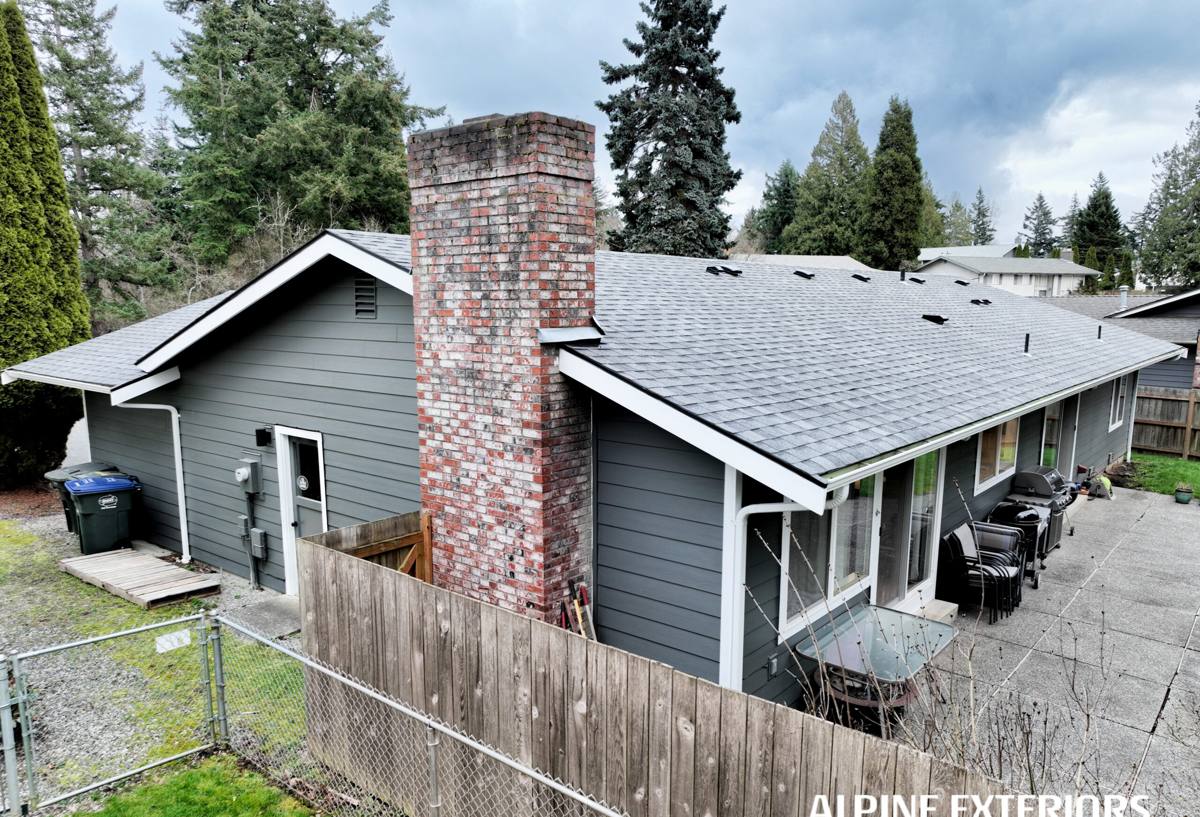
Why We Standardized on James Hardie for Jobs Like This
We install James Hardie fiber cement siding exclusively — not vinyl, not LP SmartSide, not cedar or primed spruce. That's not a marketing position, it's a response to what we've seen hold up in this climate and what hasn't. Fiber cement doesn't rot, it doesn't feed the kind of organic growth that wood-based products can, and it doesn't warp, crack, or become brittle the way vinyl can when it takes the brunt of a Pacific storm year after year. For a house absorbing salt air and driving rain on a repeating cycle, that durability is the whole point.
James Hardie backs its products with a factory-applied finish system and formulations built for specific climate zones, which matters more here than in a drier, more sheltered part of the state. We'd rather install one product correctly, understand exactly how it behaves in this climate, and stand behind it, than offer five options and hope the cheaper ones hold up.
The James Hardie Lines We Use on Deer Harbor Homes
Not every Hardie product is right for every part of a house. Matching the right line to the right application is part of what separates a correct installation from one that just looks right on installation day.
| Product | Typical Use | Why It Fits Deer Harbor |
|---|---|---|
| HardiePlank lap siding | Primary wall cladding | Factory ColorPlus finish resists the fading and chalking that salt air and UV cause faster near the water |
| HardiePanel vertical siding | Accent walls, gables, shed and outbuilding faces | Fewer horizontal laps means fewer joints for wind-driven rain to work into |
| HardieTrim boards | Corners, window and door casing, fascia | Dense, engineered material holds paint and shape better than wood trim exposed to constant moisture |
| HardieSoffit panels | Eaves and overhangs | Resists the moisture and moss buildup common under shaded, damp overhangs |
For most Deer Harbor homes we're specifying HZ5 formulations, engineered for cold, wet, freeze-exposed climate zones rather than the hot-dry formulation sold in other parts of the country. That distinction sounds minor, but installing the wrong climate zone product is one of the more common mistakes we find when we're asked to look at someone else's failing siding job.
What a Correct Installation Actually Involves
Fiber cement siding is only as good as the details underneath it. A house can have the right product on the wall and still fail early if the installation cut corners on the parts you can't see once the job is done.
Fasteners and hardware
In a salt-air environment, fastener choice matters more than usual. We use corrosion-resistant fasteners rated for the exposure, not standard hot-dip galvanized nails that can start showing rust bleed-through within a few years near the water.
Flashing and drainage
Water management happens behind the siding, not just at the surface. That means a proper weather-resistive barrier, correctly lapped flashing at every window, door, and roof intersection, and a drainage plane that lets any moisture that does get behind the cladding find its way back out instead of sitting against the wall sheathing.
Clearances and joints
James Hardie's own installation instructions specify minimum clearances from grade, roofing, and decks, along with proper gapping and sealing at butt joints. Skipping those clearances is a common shortcut, and it's exactly where houses near the water end up with moisture problems years down the road.
Getting the Job Done on Orcas Island
Working in Deer Harbor isn't the same as working a job in a mainland subdivision, and it changes how a siding project has to be planned. Materials, crews, and equipment all have to come over by ferry, which means the schedule has to account for sailing times and, during peak season, real capacity limits on the boats. Weather windows matter more too — fiber cement installation needs dry conditions for certain steps, and on an island where storms roll in off open water, a crew that doesn't already know the local patterns can lose days it didn't plan for.
A contractor who regularly works Orcas Island has already solved these problems: they know how to stage materials so a job doesn't stall waiting on a ferry reservation, they carry the right tools and backup supplies instead of discovering a gap mid-project, and they've built their schedule around island logistics rather than learning that lesson on your house.
How Our Process Works
- Site visit and assessment. We look at the existing siding, the exposure on each side of the house, and any moisture or moss damage already present.
- Written estimate. A clear scope covering product lines, trim details, and any repair work needed before new siding goes on.
- Material staging. Materials are ordered and scheduled to arrive on-island with the crew, timed around ferry availability.
- Tear-off and substrate check. We remove the old siding and inspect the sheathing and framing underneath for rot or moisture damage before closing anything up.
- Weather barrier and flashing. Every window, door, and penetration gets properly flashed before the first piece of Hardie goes up.
- Installation. Siding, trim, and soffit go on to James Hardie's specifications, including fastener type and clearances.
- Final walkthrough. We go over the finished job with you before calling it complete.
Keeping Hardie Siding Looking Right in This Climate
James Hardie siding with a ColorPlus factory finish needs far less upkeep than wood or field-painted siding, but low maintenance isn't no maintenance in a climate that grows moss on everything shaded. A little routine care goes a long way toward protecting the investment.
- Rinse siding annually with a garden hose and soft brush, focusing on shaded north- and east-facing walls where moss and algae take hold first
- Keep gutters clear so overflow doesn't run down the face of the siding and stay wet longer than it should
- Trim back branches and vegetation that keep a wall in constant shade and damp
- Check caulking at trim joints and penetrations every year or two, and recaulk before it fails rather than after water gets behind it
- Avoid pressure washing directly into laps and seams — a soft wash is enough and won't force water where it doesn't belong
What Drives the Cost of a Deer Harbor Siding Job
Every house is different, but a few factors consistently move the price on Orcas Island siding jobs more than they would on the mainland.
| Factor | Why It Matters |
|---|---|
| Site access | Waterfront and hillside lots can limit staging space and equipment access, adding time |
| Existing siding condition | Rot or moisture damage found during tear-off means sheathing repair before new siding goes on |
| Trim and detail complexity | Multiple gables, dormers, and window returns mean more cutting, flashing, and labor |
| Story height | Multi-story and steep-lot homes require more scaffolding and staging time |
| Material logistics | Ferry scheduling and staging affect timeline more than cost directly, but delays add labor days |
We give straightforward written estimates rather than vague ranges, because the honest answer depends on what we find once we're actually looking at your house.
Questions Worth Asking Before You Hire
- Have you installed James Hardie siding on Orcas Island before, and how do you handle ferry and scheduling logistics?
- What fastener and flashing details do you use for homes with direct salt-air exposure?
- Which James Hardie climate zone formulation will you be specifying for my house?
- What happens if you find rot or moisture damage once the old siding comes off?
- Is your estimate written and specific, or a rough verbal range?
If your Deer Harbor home is dealing with fading paint, moss that won't quit, or siding that's starting to show its age faster than it should, we're happy to take a look. Reach out for a free, no-pressure estimate — we'll walk the house with you and give you a straight answer on what it actually needs.