 Orcas Island
 West Sound Decks Work Harder Than Decks Inland
A deck on the west side of Orcas Island lives a different life than one built forty miles inland. West Sound sits exposed to weather moving in off the water, and that means more wind-driven rain hitting vertical surfaces, more salt-laden air working on metal and wood fibers, and a long wet season that gives moss and algae months to establish themselves on any horizontal surface that doesn't dry out quickly. None of that makes deck building here impossible — it just means the standard big-box lumber yard approach to decking, the kind built for a dry inland subdivision, tends to fail early. Fasteners rust and streak the boards. Ledger connections trap moisture against the house. Framing that isn't gapped and ventilated properly stays damp long after the rain stops, and that's exactly the environment moss and rot organisms want.
Building correctly for San Juan County's marine climate isn't about upgrading everything to the most expensive material available. It's about matching each component — framing, fasteners, decking, flashing — to the actual conditions it will sit in for the next twenty-plus years.
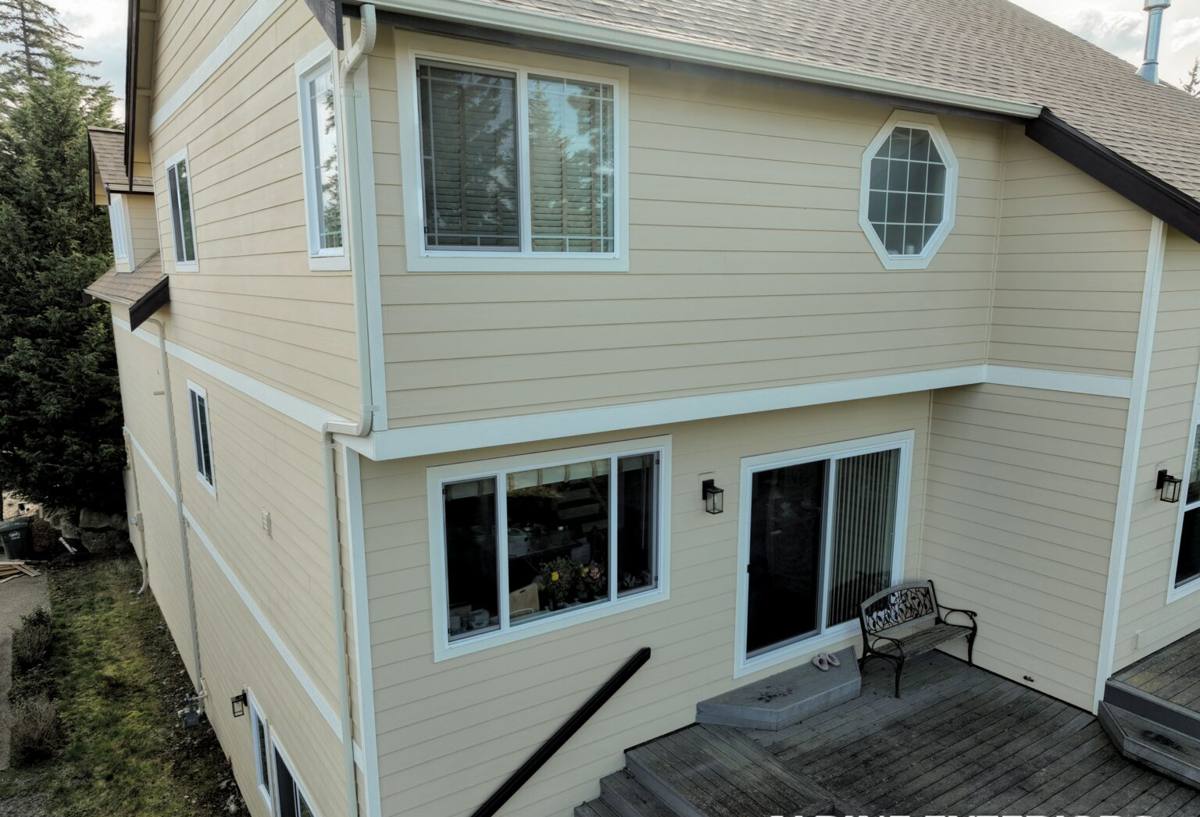
What Building for the Coast Actually Means
"Coastal-rated" gets used loosely in the decking trade, so it's worth being specific about what it means for a West Sound project.
Corrosion resistance in the hardware
Standard hot-dip galvanized fasteners hold up fine in most of the country. Close to salt water, they can start showing rust bleed within a few seasons, especially on structures with direct sea air exposure. For West Sound decks we favor stainless steel fasteners and connectors — 316-grade where budget and application allow — on ledger bolts, joist hangers, and any hardware that's difficult to inspect or replace once the decking is down. It costs more up front. Replacing rusted structural hardware under a finished deck costs a lot more later.
Moisture management, not just moisture resistance
Every decking material sheds some water. The difference between a deck that lasts and one that doesn't is usually what happens to the water that doesn't shed — where it pools, what it sits against, and how fast the framing underneath actually dries between storms.
Framing and Footings on Orcas Island Terrain
Much of the ground around West Sound is a mix of thin soil over rock, uneven grade, and root systems from mature trees — not the flat, deep-soil building pad you'd get in a typical subdivision. That changes how footings get planned. We dig and pour to actual frost and bearing conditions found on site rather than assuming a standard depth, and on rocky or sloped lots we adjust footing placement and beam spans to work with the terrain instead of blasting or over-excavating unnecessarily.
Framing lumber itself should be pressure-treated for ground contact wherever it's within the required clearance of soil, grade, or standing water, and every ledger-to-house connection gets proper flashing so rain running down the siding is directed away from the band joist rather than into it. This is the single most common failure point we see on older island decks — a ledger board that was face-nailed to the house with no flashing, quietly rotting the rim joist behind it for years before anyone notices a soft spot underfoot.
Choosing a Decking Material for This Climate
There's no single "best" decking material — there's a best fit for your budget, your maintenance appetite, and how exposed the deck is to weather. Here's how the common options actually perform in a West Sound environment specifically.
| Material | How it handles salt air and rain | Moss/algae behavior | Maintenance |
|---|---|---|---|
| Pressure-treated fir/hem-fir | Good if properly sealed and re-coated; the wood itself tolerates moisture but fasteners and hardware need to be corrosion-resistant | Prone to moss/algae film if not cleaned periodically, especially in shaded spots | Re-seal or stain every 1-3 years; annual cleaning recommended |
| Cedar | Naturally rot- and insect-resistant, but softer and can gray or check faster under constant wind-driven rain | Similar moss risk to PT lumber in shaded, damp areas | Regular oiling/sealing to hold color and resist checking |
| Composite decking | Doesn't absorb moisture the way wood does, resists warping and splintering from repeated wet-dry cycles | Can still grow surface algae/moss film if shaded and rarely cleaned — composite doesn't rot, but it can look dirty if ignored | Periodic washing; no staining or sealing required |
| PVC decking | Fully moisture-impervious, handles driving rain and salt spray without material degradation | Same surface-film consideration as composite | Lowest maintenance of the group; occasional cleaning |
For a shaded, north-facing deck close to the water, we're often steering clients toward composite or PVC simply because it takes the yearly moss-and-mildew cleaning burden down significantly compared to bare wood. For a sunnier, more sheltered site, a well-built PT or cedar deck with the right fasteners and a disciplined re-sealing schedule can perform very well and costs less to build.
Fasteners, Flashing, and the Details That Prevent Early Failure
Most deck problems we get called out to repair on the island didn't start with the decking boards — they started with something underneath or behind them that was never protected properly. A few specifics we treat as non-negotiable on every West Sound project:
- Self-adhering flashing tape on every joist top, so screw penetrations don't create a path for water into the wood fibers
- Proper ledger flashing with a drip edge, kept separate from the house's water-resistive barrier so water can't wick behind the siding
- Stainless or coated structural hardware at every connection exposed to weather or hard to access later
- Consistent gapping between deck boards for drainage and airflow, sized correctly for the decking material used
- Post bases that hold wood off standing water, not buried or set flush against wet grade
None of these are visible once the project is finished, which is exactly why it's worth asking a contractor directly whether they're standard practice, not an upgrade.
Railings and San Juan County Permitting
Any deck built above a certain height off grade needs a code-compliant guardrail — correct height, baluster spacing that meets code so a small child can't pass through, and a graspable handrail on stairs. Beyond the safety code itself, most deck construction on Orcas Island requires a permit through San Juan County, and elevated or larger decks typically need an engineered or code-verified footing and framing plan. We handle that permitting and inspection process as part of the build rather than leaving it for the homeowner to sort out, which matters more here than in places where enforcement is loose — San Juan County does inspect, and an unpermitted deck can become a real problem at resale.
Our Process for a West Sound Deck
We start with an on-site visit, not a phone estimate, because terrain, sun/shade exposure, and proximity to the water genuinely change the right materials and framing approach for your specific lot. From there:
- Site assessment — grade, drainage, existing structure condition if this is a replacement, and how exposed the location is to prevailing weather
- Material and layout discussion — decking type, railing style, and any tradeoffs between upfront cost and long-term maintenance
- Permit drawings and San Juan County submittal where required
- Demo of the old deck if applicable, with attention to what condition the framing and ledger connection were actually in underneath
- Framing, flashing, and hardware installation to the standards above
- Decking, railing, and final inspection
We schedule around ferry and delivery logistics up front, so material lead times don't turn into a half-finished deck sitting exposed to a rainy stretch mid-build.
Living With a Deck in a Moss-Prone Climate
Even a well-built deck needs some seasonal attention on Orcas Island. A short maintenance routine keeps moss from getting a foothold and catches small issues before they become structural ones:
- Sweep debris and standing organic matter off the deck surface regularly, especially in fall and winter
- Rinse or lightly wash the surface once or twice a year to keep algae and moss film from establishing, more often in shaded areas
- Check that gaps between boards haven't filled with debris that traps moisture
- Inspect the ledger area and any visible fasteners once a year for rust streaking or softness
- Re-seal or re-stain wood decking on the schedule appropriate to the product, not just when it starts looking gray
- Trim back overhanging vegetation that's keeping sections of the deck shaded and damp longer than necessary
None of this is a lot of work, but skipping it is how a well-built deck ends up needing board replacement or hardware repair years earlier than it should.
Why It Matters That We Already Work This Area
Building decks on Orcas Island isn't the same trade as building them somewhere with predictable inland weather and easy material delivery. We already know which fastener grades hold up on this side of the island, how local footing conditions typically run, and what San Juan County's permitting process expects. That local knowledge shows up in fewer surprises during the build and a deck that's actually specified for the site it's sitting on, not a generic plan pulled off a shelf.
If you're planning a new deck or replacing one that's showing its age, we're happy to come take a look and put together a straightforward, no-pressure estimate. Use the form below to get started.