 Orcas Island
 Building a Deck That Can Handle Crow Valley's Weather
Crow Valley sits inland from the rocky edges of Orcas Island, tucked in the low ground between the island's ridgelines, but the distance from open water doesn't buy the farms and homes there much protection from the weather. Salt-laden marine air still moves up the valley with the prevailing winds off the San Juan Islands, and the shade from the surrounding slopes keeps the ground and any wood structure on it damp long after the rest of the island has dried out. Add in a moss season that can run from late fall through spring, and you've got conditions that will find every weak point in a poorly built deck — soft spots in decking, corroded fasteners, rot at the ledger board — usually within a few wet winters, not decades.
A deck built for Crow Valley isn't fundamentally different in design from one anywhere else in Washington, but the details that get glossed over on an easier job matter more here. Drainage, fastener grade, and material choice aren't upgrades in this part of San Juan County — they're what separates a deck that lasts twenty-plus years from one that's showing soft boards and rust streaks in five.
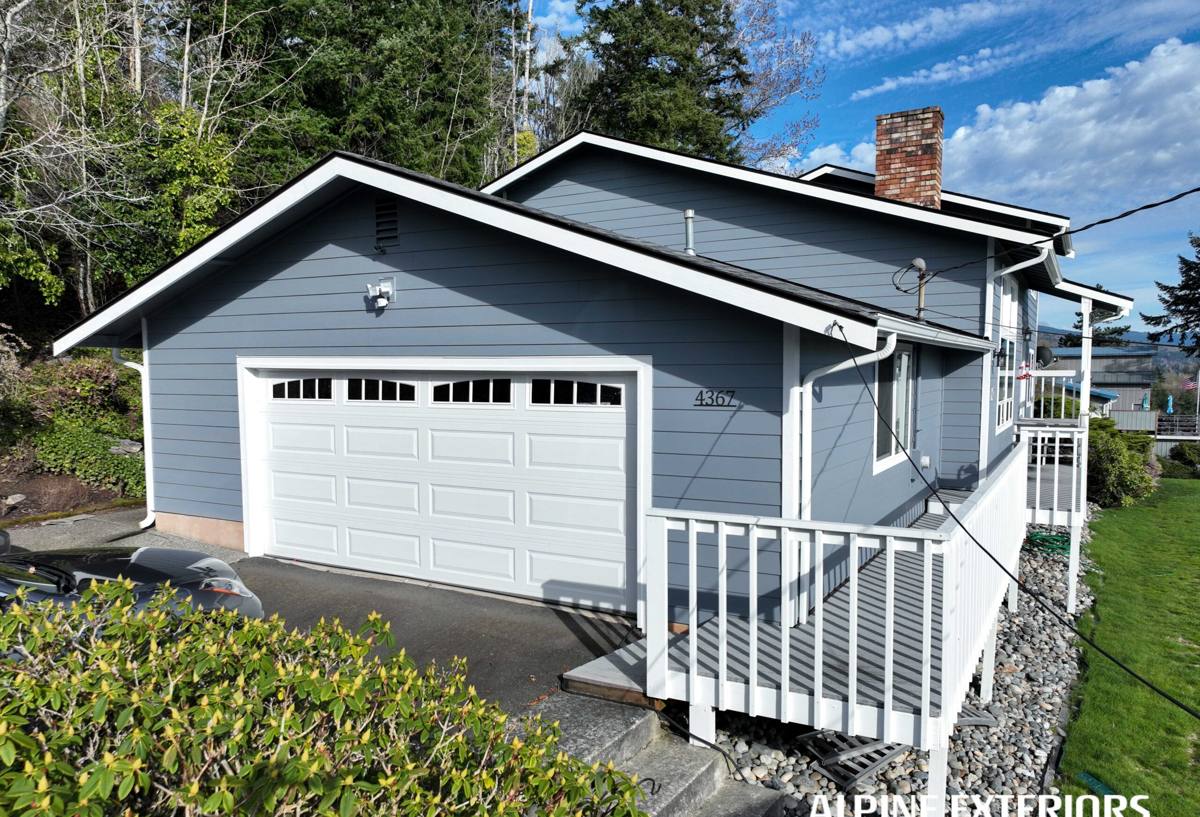
What a Deck Needs to Survive in Crow Valley
Ground Conditions and Footings
Much of Crow Valley is low, flat farmland with heavier, slower-draining soil than you'll find on the rockier parts of Orcas Island. That matters for footings. Concrete piers set too shallow, or set without adequate gravel drainage beneath them, sit in standing moisture for much of the winter and are more prone to frost heave and long-term settling. We dig to the depth San Juan County's building code requires for the site conditions and always bed footings in compacted drainage rock, not bare soil, so water has somewhere to go besides sitting against the concrete.
Ledger Attachment and Flashing
The single most common failure point on decks we're called out to repair — here and across the county — is the ledger board, where the deck attaches to the house. If that connection isn't properly flashed, water works its way behind it and rots the rim joist and sheathing from the inside, often for years before it shows on the surface. In a valley environment with extended damp periods, that clock runs faster. We flash every ledger connection with corrosion-resistant flashing lapped correctly with the house's water-resistive barrier, not just caulked and hoped for.
Choosing Decking Material for a Damp, Shaded Valley
There's no single "right" decking material for every Crow Valley property — it depends on your budget, how much upkeep you want to do, and how much direct sun the site actually gets. Here's how the common options hold up in this kind of climate:
| Material | Moisture & Moss Behavior | Maintenance | Relative Cost |
|---|---|---|---|
| Cedar | Naturally rot- and insect-resistant; still needs airflow underneath to avoid trapping moisture in shaded spots | Periodic cleaning and re-staining or sealing to hold color and shed moss | Mid |
| Pressure-Treated Fir/Hem-Fir | Treatment resists rot but cut ends and fastener holes need field treatment or they become entry points | Regular cleaning; stain or seal to control graying and moss growth | Lower |
| Composite Decking | Doesn't rot or splinter, but can trap surface moisture and grow moss/algae in shaded, low-airflow areas if not cleaned | Occasional washing; no staining or sealing required | Higher |
| Tropical Hardwood (e.g., ipe) | Very dense and naturally rot-resistant; sheds water well but is unforgiving of poor fastening or inadequate gapping | Periodic oiling to maintain color, though bare gray weathering is also common and low-maintenance | Highest |
In shaded, low-airflow parts of Crow Valley, we lean toward materials and installation details that let air move under and between boards — proper joist spacing, correct board gapping, and in some cases raised pedestal or sleeper systems on lower sections — because in this climate, moss and mildew are more about trapped moisture than the decking material itself.
Framing, Fasteners, and Hardware That Won't Corrode
People are often surprised that salt air affects fasteners well inland from the shoreline, but on an island the size of Orcas, marine air doesn't stay confined to the waterfront. Standard electro-galvanized screws and hangers can start showing surface rust within a couple of wet seasons in this environment, and once a fastener starts to corrode, it loses holding strength long before it looks obviously bad. For framing hardware — joist hangers, post bases, structural screws — we use hot-dip galvanized or stainless-rated hardware sized to the actual loads, not whatever happens to be cheapest at the yard. We also run joist tape over the tops of joists and beams before decking goes down, which keeps water from sitting in the screw holes and wicking into the wood grain over time.
Railings and Guarding Built for the Pacific Northwest
Washington's building code sets minimum height and baluster spacing requirements for any deck guard over 30 inches off grade, and San Juan County enforces those same standards. Beyond meeting code, the railing material matters for longevity in a damp valley setting. Wood railings need the same attention to fastener grade and finish as the decking itself. Metal cable or aluminum systems shed moisture well and don't need refinishing, but connection points and any welds should be rated for exterior, coastal-adjacent use — not a generic interior-grade product. Whatever system you choose, we build the substructure to actual code-required loads, since a railing that looks fine but was under-built at the posts is one of the more dangerous shortcuts in deck construction.
Moss, Mildew, and Keeping a Crow Valley Deck Looking Good
No deck material is completely moss-proof in a climate this wet and shaded for parts of the year. What keeps a deck looking good and lasting long is a simple, consistent maintenance routine:
- Sweep debris and fallen leaves off the surface regularly through fall — trapped organic matter is what moss and algae actually feed on
- Rinse or wash the deck surface at least once or twice a year to clear early moss and mildew before it takes hold
- Keep gutters and downspouts near the deck clear so runoff isn't draining directly onto or under it
- Check and clear debris from the gaps between boards, which is where moisture collects first
- Reseal or re-stain wood decking on the manufacturer's recommended cycle rather than waiting until it visibly fails
- Walk the underside and framing once a year to catch any early rust streaking or soft wood before it spreads
None of this is complicated, but skipping it is exactly how a well-built deck in Crow Valley starts looking neglected within a few seasons.
Our Deck Building Process
- Site visit and design: We walk the property, assess drainage, sun/shade exposure, and how the deck ties into the house, then talk through material and layout options that fit the budget.
- Permitting: We handle the San Juan County permit application and any required inspections, so you're not navigating that process on your own.
- Material and hardware selection: We spec decking, framing lumber, and fastener grade based on the site's actual exposure, not a one-size-fits-all default.
- Construction: Footings, framing, ledger flashing, decking, and railings are built in sequence with inspections at the required stages.
- Final walkthrough: We go over the finished deck with you, including what maintenance it needs and on what schedule, before we call the job done.
Why Hire a Crew That Already Works in Crow Valley
Getting materials and equipment to any Orcas Island job site takes planning that mainland contractors often underestimate — ferry schedules, load timing, and knowing which suppliers can actually get the right lumber and hardware grades out to the island without delay. A crew that regularly works Crow Valley and the rest of Orcas Island isn't guessing at that logistics puzzle for the first time on your project.
Just as important is knowing the ground itself. We've seen how the valley's soil drains, where shaded lots hold moisture longest, and which fastener and flashing details actually hold up through a full San Juan County winter versus which ones look fine on install day and fail two years in. That local track record is also why we're familiar with the county's permitting process and inspection expectations, which keeps your project moving instead of stalled on paperwork.
What Affects the Cost of a Crow Valley Deck
Every deck is priced around the specifics of the site and the scope of work, but a few factors consistently move the number more than others:
| Factor | Why It Matters |
|---|---|
| Size and shape | More square footage and complex layouts (multiple levels, angles, wraparounds) mean more framing and labor |
| Decking material | Pressure-treated lumber runs lowest, cedar and composite mid-to-upper range, tropical hardwoods highest |
| Site grading and access | Sloped or low-lying ground needs more excavation and footing work, and tighter access adds labor time |
| Railing type | Basic wood balusters cost less than cable or metal railing systems |
| Ledger and structural condition | If the attaching wall needs repair before the ledger goes on, that's added scope, not a deck cost |
We give you a firm, itemized quote after the site visit, not a rough number based on square footage alone — that's the only way to price a deck accurately given how much site conditions vary even within Crow Valley.
If you're planning a new deck or need to know whether an existing one is holding up the way it should, we're happy to take a look and give you a straightforward, no-pressure estimate. Use the form below to get in touch.