 Orcas Island
 Board & Batten on Lopez Island: A Style Built for Island Living
Board and batten has become one of the most requested siding profiles on Lopez Island, and it's not hard to see why. The vertical lines suit the mix of farmhouses, newer builds, and outbuildings scattered across the island, and the deep shadow lines the battens create hold up well against the flat, overcast light San Juan County gets for a good chunk of the year. It's a look that reads as both traditional and current, which is why we get more requests for it here than almost anywhere else in our service area.
But board and batten is also one of the least forgiving profiles to get wrong. The vertical joints, the narrow reveal between battens, and the way water sheets down a flat panel face all put more pressure on material choice and installation detail than a standard lap siding job does. On an island where every siding failure means another ferry trip to fix it, that margin for error matters more than it does on the mainland.
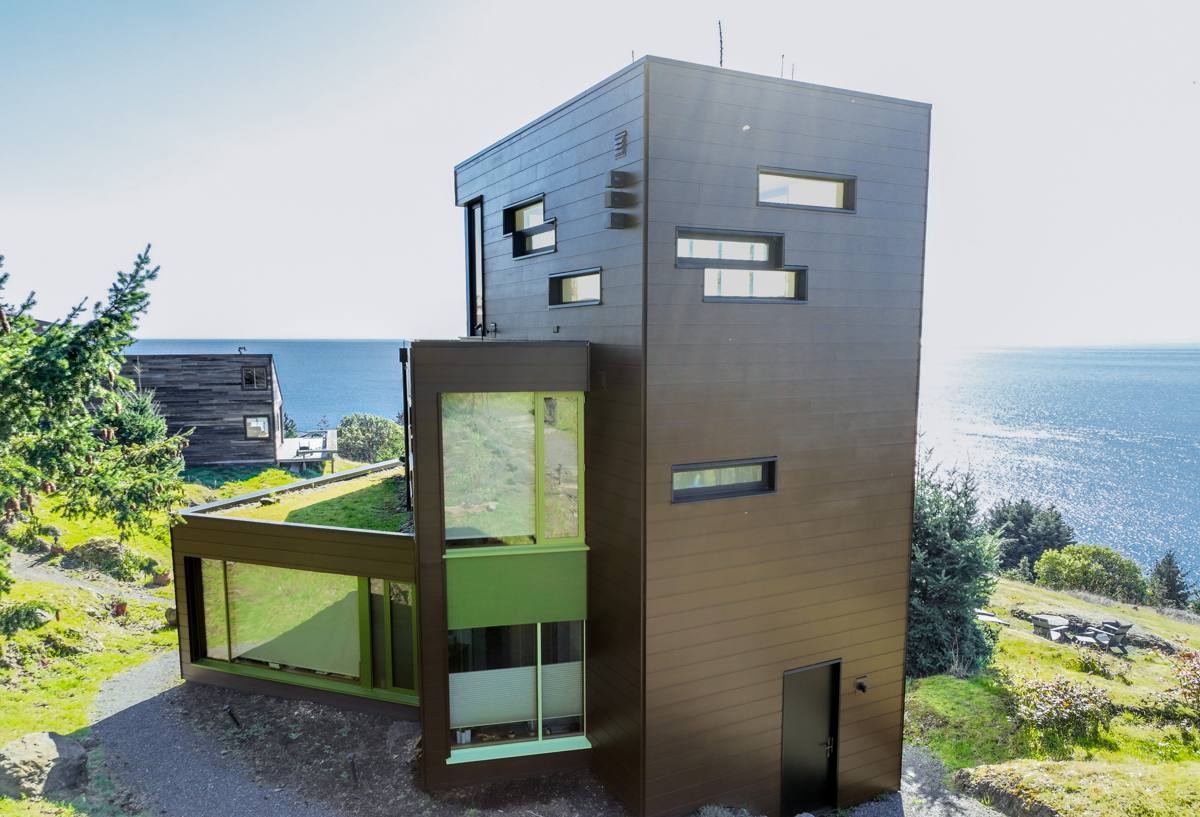
What Salt Air, Driving Rain, and Moss Season Do to Vertical Siding
Salt-Laden Wind
Lopez Island sits fully exposed to Puget Sound and the Strait of Georgia weather systems that move through the San Juans. Salt-laden wind off the water accelerates the breakdown of paint films, corrodes exposed fasteners, and works into any gap or seam it can find. Board and batten has more vertical seams per square foot than lap siding, and every one of those seams is a place salt-driven moisture can start doing damage if the material or the installation isn't up to it.
Driving Rain
Storms here don't just fall straight down — wind-driven rain hits walls at an angle, and it hits harder on exposed, west- and south-facing elevations that catch weather straight off the water. A flat vertical panel with battens over the seams is designed to shed that water, but only if the assembly behind it is built to handle whatever gets past the face — and on Lopez Island, something always gets past the face eventually.
A Long Moss Season
San Juan County's damp, mild winters and shaded, tree-lined lots on much of Lopez Island add up to a moss and algae season that runs longer than it does in drier parts of the state. Moss holds moisture against a wall for weeks at a time, and on siding materials that swell, delaminate, or rot when kept wet, that's a slow, steady path to failure. Material choice determines whether that's a cosmetic nuisance you wash off once a year or a structural problem.
Why We Only Install Board & Batten in James Hardie Fiber Cement
Board and batten can be built out of cedar, engineered wood like LP SmartSide, vinyl, or fiber cement, and each of those materials behaves differently once it's holding up against a marine climate for years on end. Cedar looks great new but needs consistent refinishing to keep water out of the vertical grain, and vertical grain is exactly what board and batten exposes the most. Engineered wood products use a treated wood substrate that resists moisture better than raw lumber, but the substrate is still wood, and wood-based sidings depend on the factory coating and correct field sealing to stay that way over decades of salt air and rain. Vinyl board and batten is inexpensive and low-maintenance, but it's a thin plastic panel that can warp, fade, and crack under UV and temperature swings, and it isn't rated to help protect the wall assembly behind it the way a rigid panel does.
James Hardie fiber cement is cement, sand, and cellulose fiber — it doesn't rot, it isn't a food source for moss or mildew, it doesn't expand and contract the way wood does, and it's non-combustible. It's also the only one of these options that comes with a factory-applied ColorPlus finish baked on and warrantied specifically for color retention in tough climates, rather than a field-applied or job-site-sprayed coating that's only as good as the day it was applied. That combination is why it's the only board and batten system we put on Lopez Island homes.
How a James Hardie Board & Batten System Actually Goes Together
Panels and Battens
Correctly built Hardie board and batten uses HardiePanel vertical siding as the flat field panel, with HardieTrim boards installed over the panel seams as the battens. It is not a single molded piece pretending to be board and batten — it's a real two-part assembly, which is part of why the shadow lines look right and stay looking right.
The Drainage Gap Behind the Panel
On a marine-climate island, what's behind the siding matters as much as the siding itself. We install over a rainscreen or furring strip system that creates a drainage gap between the panel and the water-resistive barrier, so any moisture that does get past the face — through a nail hole, a seam, or wind-driven rain forced under a batten — has somewhere to go besides straight into the wall. Face-nailing panels flat to sheathing with no gap is a common shortcut, and it's the single biggest reason board and batten jobs trap moisture and fail early.
Flashing and Joints
Every horizontal panel joint, window and door opening, and roof-to-wall transition gets flashed and integrated with the water-resistive barrier before the next piece goes on — not caulked over afterward. Battens get fastened per Hardie's engineering specs, with fastener spacing and edge distances that account for the wider, harsher weather exposure this part of the state sees.
Board & Batten Material Options Compared
| Material | How It Handles Salt Air & Rain | Moss/Algae Resistance | Long-Term Maintenance |
|---|---|---|---|
| James Hardie fiber cement | Non-combustible, dimensionally stable, factory finish resists coastal weathering | Cement-based, not an organic food source | Occasional wash; no refinishing on ColorPlus panels |
| Cedar | Natural rot resistance but vertical grain absorbs driving rain at seams | Organic material, needs regular treatment | Refinish/reseal every few years |
| LP SmartSide (engineered wood) | Treated wood substrate, depends on coating and sealed cuts staying intact | Coating must stay intact to resist moisture and organic growth | Inspect and touch up cut edges and seams regularly |
| Vinyl board & batten | Thin panel can warp/crack in temperature swings and high wind exposure | Resists moss itself but doesn't manage wall moisture | Low upkeep but limited lifespan in harsh exposure |
Our Process for Lopez Island Projects
Getting Materials and Crew to the Island
Working on Lopez Island means planning around ferry schedules, not just a work calendar. We order materials in full before mobilizing, confirm quantities and batten trim counts up front, and schedule crew time in blocks that make the ferry crossing worthwhile rather than making multiple partial trips. That planning is part of the estimate, not an afterthought that turns into delays once the job has started.
Weather-Window Scheduling
Fiber cement can be installed in a wider range of conditions than wood-based products, but we still work around the wettest stretches of the year when we can, especially for cuts, caulking, and finish work where a dry substrate matters. On an island where a rain system can roll in with little warning, having a crew that already knows the local weather patterns means fewer surprises mid-project.
Site Walk and Existing Conditions
Before we price a board and batten job, we look at what's actually happening on the wall now — trapped moisture, prior water damage around windows, sheathing condition, and how much sun or shade each elevation gets, since that affects both moss growth and how the siding will weather over time. That walk-through is what turns a generic quote into an accurate one.
Maintenance Checklist for Board & Batten in a Marine Climate
James Hardie fiber cement needs far less upkeep than wood or engineered wood siding, but "low-maintenance" isn't "no-maintenance," especially this close to the water. A short annual routine keeps board and batten performing the way it's supposed to:
- Rinse the siding down once or twice a year to clear salt residue, pollen, and early moss growth before it takes hold
- Check battens and trim boards near ground level and under overhangs, where moss and moisture linger longest
- Look at caulking around windows, doors, and penetrations yearly — this is the maintenance item people skip, and it's the one that matters most
- Keep gutters clear and downspouts directed away from the wall so runoff isn't dumping extra water onto any one section of siding
- Trim back vegetation and tree cover that keeps a wall shaded and damp longer than the rest of the house
- Watch for any soft spots, staining, or discoloration at panel bottoms and report them early rather than waiting for them to spread
Why Hiring a Crew That Already Works Lopez Island Matters
A contractor who only occasionally makes it out to the San Juans is going to make the same assumptions they'd make on a mainland job — standard fastener spacing, standard drainage details, standard scheduling — and those assumptions don't hold up against this island's exposure. We've built our process around the realities of working here: how to sequence a job around the ferry, how much material buffer to order so a missed detail doesn't mean a week's delay, and which elevations on an island home take the worst of the weather based on where the property sits relative to open water.
That local familiarity isn't a marketing line — it's the difference between a board and batten installation that's built for San Juan County's climate and one that's built for wherever the contractor normally works. Getting it right the first time matters more here than almost anywhere else, simply because getting a crew back out to fix it is never as simple as a quick callback.
If you're weighing board and batten siding for a Lopez Island home, we're happy to walk the property, talk through what your specific elevations and exposure call for, and put together a straightforward, no-pressure estimate — just fill out the form below to get started.