 Orcas Island
 Asphalt Shingle Roofing Built for the Cascade Lake Microclimate
Homes around Cascade Lake sit in a pocket of Orcas Island where lake moisture, dense tree cover, and the marine air moving off the San Juan waterways all meet. That combination is hard on a roof. Shade from the surrounding forest keeps shingles damp long after a storm has passed, salt-laden air slowly works on metal flashing and fasteners, and wind-driven rain off the Sound finds every weak seam in an underlayment or a poorly lapped flashing detail. An asphalt shingle roof that's specified and installed correctly for this environment can go the distance. One that's installed the same way it would be in a dry inland climate usually can't.
We install and repair asphalt shingle roofs throughout the Cascade Lake area, and we build every job around what this specific setting does to a roof over time, not a generic install spec.
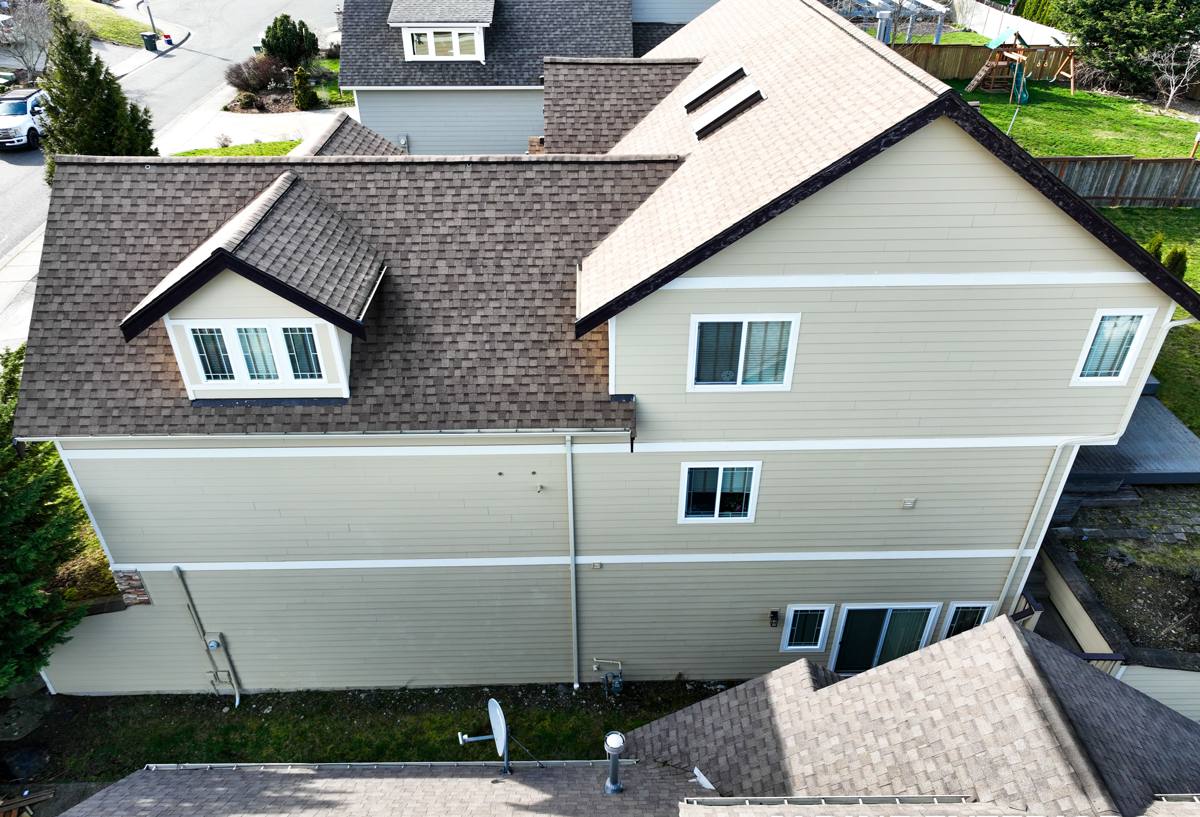
What Salt Air, Rain, and Moss Actually Do to a Roof Here
Understanding the failure pattern is what lets us prevent it. Three things drive most of the shingle roof problems we see on this end of Orcas Island:
Persistent Moisture
Homes tucked near Cascade Lake and under tree canopy get less direct sun and more shade than roofs out in the open. Shingles that stay damp longer hold onto spores, dirt, and organic debris, which accelerates granule loss and gives moss and moss-precursor algae a foothold.
Moss and Organic Growth
Moss doesn't just sit on top of a roof looking bad. Its root structure works into the shingle surface and lifts tabs, and mats of moss and needle debris trap water against the roof deck long after the rain has stopped. Left long enough, that trapped moisture works its way under shingles and into the deck itself.
Salt-Air Corrosion
Orcas Island's proximity to salt water means airborne salt reaches even inland properties around the lake, especially in wind-driven weather. Standard steel fasteners, unprotected flashing, and bargain-grade roof vents corrode faster here than they would well away from the water. That corrosion is usually invisible until a leak shows up somewhere else entirely.
Choosing the Right Shingle for a Shaded, Damp Site
Not every asphalt shingle product handles this environment the same way. The differences that matter most for a Cascade Lake home are algae resistance, wind rating, and how the shingle sheds water on a low-pitch or shaded section of roof.
| Shingle Type | Typical Lifespan | Best Fit | Consideration for This Area |
|---|---|---|---|
| 3-tab asphalt | 15–20 years | Budget-conscious reroofs, outbuildings | Lower wind rating and less algae resistance; not our first recommendation under heavy tree cover |
| Architectural (laminate) asphalt | 25–30 years | Most homes around the lake | Thicker profile sheds water better and holds up to wind gusts off the water |
| Algae-resistant (AR) shingles | Same as base product | Any shaded or damp roof plane | Copper-infused granules slow moss and algae growth; strongly recommended here |
| Impact-rated shingles | 25–30+ years | Homes with debris-fall risk from overhanging trees | Worth discussing where branches or cones regularly hit the roof |
For most Cascade Lake homes, we recommend an algae-resistant architectural shingle as the baseline, not an upgrade. Given how much shade and moisture this area gets, the AR granule treatment isn't a luxury add-on — it's the difference between a roof that stays clean for a decade and one that's growing moss within two or three years.
What a Correct Installation Actually Involves
A shingle roof is only as good as what's underneath it. In this climate, the assembly matters as much as the shingle brand on the wrapper.
- Ice-and-water shield at eaves and valleys — a self-adhering membrane at the vulnerable low points where water backs up or concentrates
- Synthetic underlayment across the full field — more consistent water resistance than old-style felt, and it holds up better through a wet install season
- Properly lapped and step-flashed transitions — around chimneys, skylights, and roof-to-wall junctions, where the majority of real leaks originate
- Corrosion-resistant fasteners and flashing — specified for the salt exposure this area sees, not generic mild-steel hardware
- Correct nailing pattern and fastener count — under-nailing is a common shortcut that shows up later as lifted or blown-off shingles in a windstorm
- Balanced intake and exhaust ventilation — so the attic and roof deck can actually dry out between rain events
Skipping any one of these doesn't show up on day one. It shows up two, five, or ten years later, usually as a leak that traces back to an install shortcut rather than a shingle defect.
Ventilation and Moisture Control Matter More Under Tree Cover
A shaded roof near Cascade Lake dries out slower than an equivalent roof in full sun. That makes attic ventilation more important here, not less. Without enough intake at the eaves and exhaust at the ridge, warm moist air gets trapped under the deck, condenses, and keeps the underside of the roof damp even on days when the shingles above are dry. Over time that moisture contributes to deck rot, mold, and premature shingle failure from below — problems a homeowner can't see from the ground or even from a ladder.
When we quote a reroof, we look at the existing ventilation as part of the job, not as an afterthought. On some homes that means adding intake vents, correcting a blocked soffit, or upgrading a ridge vent — work that costs little compared to the roof itself but has an outsized effect on how long the new roof actually lasts.
Our Process for a Cascade Lake Reroof
We keep the process straightforward and try to minimize surprises, which matters most on a job where weather windows are unpredictable.
- On-site inspection — we check the roof deck, flashing, ventilation, and any moss or moisture damage, not just the shingle surface
- Written estimate — a clear scope covering tear-off, underlayment, flashing, ventilation changes, and shingle selection, with no vague allowances
- Scheduling around the weather — we plan tear-off and dry-in for the best available window so the deck isn't exposed longer than necessary
- Tear-off and deck inspection — old roofing comes off and we inspect the deck itself for rot or soft spots before anything new goes down
- Installation — underlayment, flashing, and shingles installed to the assembly described above
- Site cleanup and walkthrough — magnetic sweep for stray fasteners and a final walkthrough so you know exactly what was done
Maintenance That Actually Extends a Shingle Roof's Life
Even a well-installed roof needs some basic upkeep in a moss-prone, tree-shaded setting. None of this is complicated, but it's easy to let slide until there's a problem.
- Keep gutters and valleys clear of needles and leaf litter, especially heading into fall storms
- Have moss removed by hand or with a proper roof-safe treatment — never pressure-washed, which strips granules and shortens shingle life
- Trim back overhanging branches to cut down on shade and debris load where it's practical to do so
- Schedule a roof check after major windstorms, since lifted or cracked shingles are easiest to fix before the next rain finds them
- Address small flashing leaks early — they're inexpensive to fix and expensive to ignore
Repair or Replace? What Actually Drives That Decision
Not every roofing issue on a Cascade Lake home means a full reroof. The right call depends on the roof's age, how widespread the damage is, and what's happening at the deck level.
| Factor | Leans Toward Repair | Leans Toward Replacement |
|---|---|---|
| Roof age | Under 12–15 years | Approaching or past 20–25 years |
| Damage extent | Isolated area (one slope, one flashing point) | Widespread granule loss or moss across the roof |
| Deck condition | Solid, no soft spots | Signs of rot or soft decking underneath |
| Leak history | First occurrence, clear cause | Recurring leaks in different spots |
| Ventilation | Adequate and functioning | Undersized or blocked, contributing to deck damage |
We'll always tell you honestly which side of that line your roof is on. A targeted repair is often the right answer, and we're not going to push a full reroof when the roof has years of honest service left in it.
Why a Local Crew That Already Works Cascade Lake Matters
Roofing crews unfamiliar with San Juan County conditions tend to spec roofs the same way they would anywhere else — and that's exactly the gap that shows up as premature moss, corroded fasteners, or a leak at a flashing detail that wasn't built for driving rain off the water. A crew that regularly works homes around Cascade Lake and the rest of Orcas Island already knows which shingle lines hold up under tree cover, which flashing details actually stop wind-driven rain, and how to sequence a tear-off around an island weather window instead of getting caught mid-job by an incoming system. That local experience isn't a marketing line — it's the reason the same roofing assembly performs differently here than it would twenty miles inland.
If you're weighing a repair, a full reroof, or just want an honest read on how much life your current roof has left, we're happy to take a look. Reach out for a free, no-pressure estimate using the form below.